King Island Photography Safari, day 2
Last year, I went to King Island, Tasmania just before Christmas for a 4-day photography safari with my friends Craig and Caroline. I’ve already published my blog post about day 1.
We met every morning for breakfast in the dining room, upstairs at King Island Motel where we stayed. Very simple – toast with real butter and strawberry jam or Vegemite, cereal, peaches in syrup, coffee, tea and orange juice. Normally, this would be inadequate to keep me going until lunch, but we’d have morning tea while out on the road.
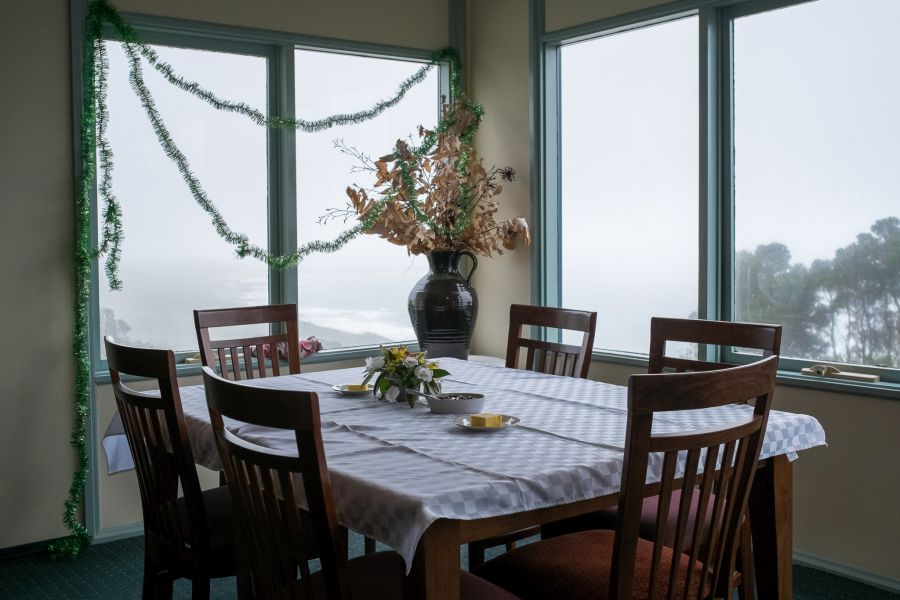 Our breakfast table each day.
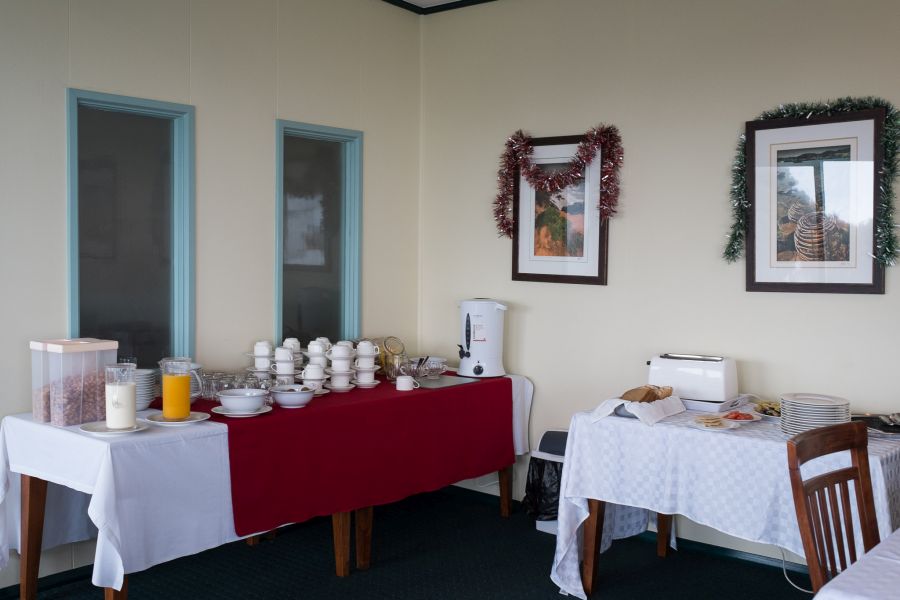 Self-service continental breakfast.
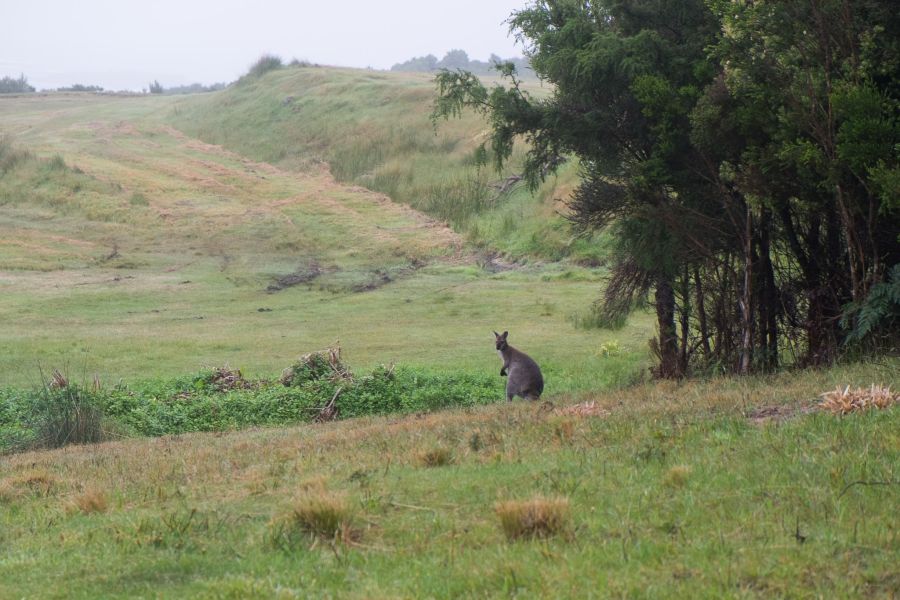 There are wallabies all over King Island and this was the first one I saw on my walk before breakfast.
There are three main towns on King Island. Currie, the largest town, on the west coast of the island, Grassy on the south east coast, and the seaside village of Naracoopa, on the east coast. King Island Motel is in Grassy, but our driver and guide Ian took us all over the island over the four days.
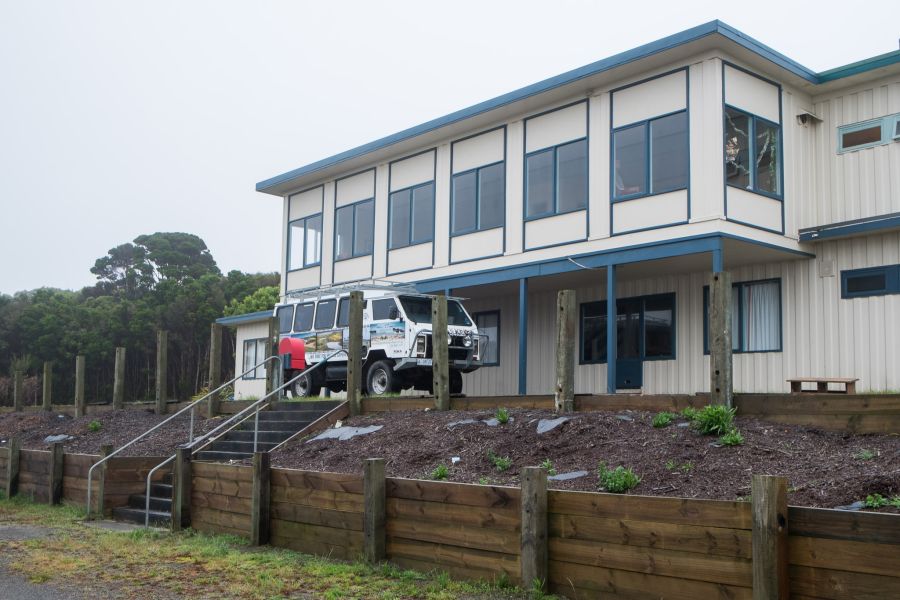 The front of our accommodation – the dining room is upstairs with panoramic views; our rooms were on the ground floor.
After breakfast, another day driving in search of photographic opportunities – and we found them. There was just a light drizzle to contend with today, though the sky continued to be overcast and hazy.
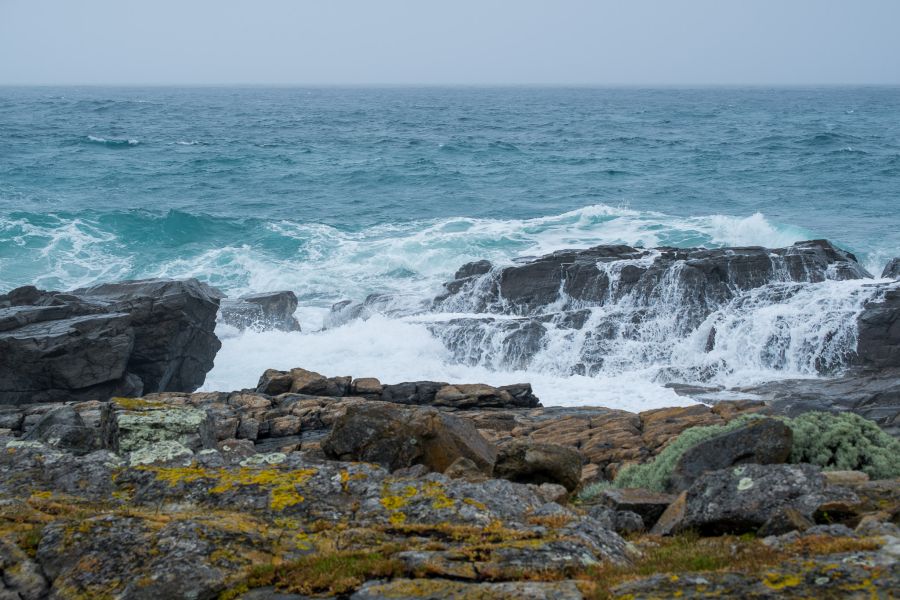
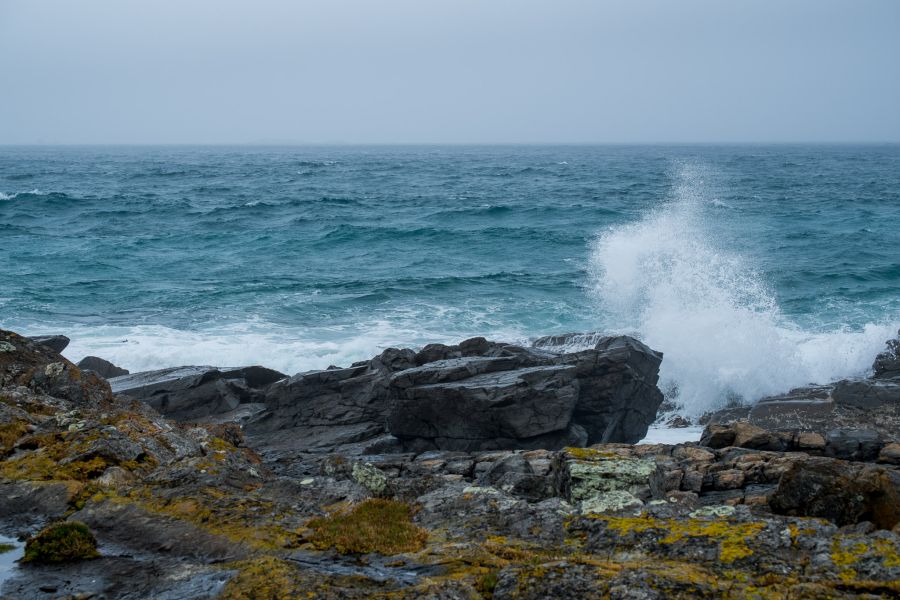
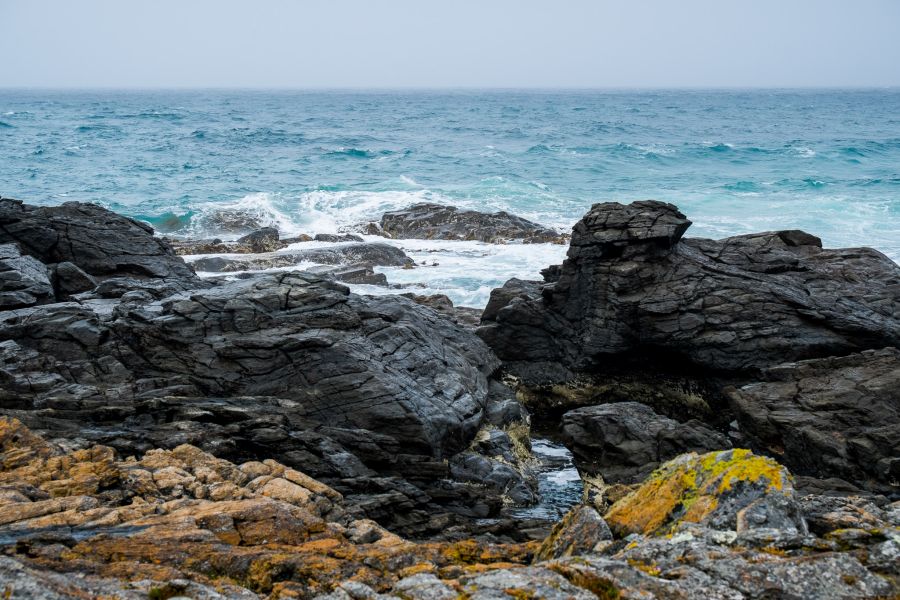
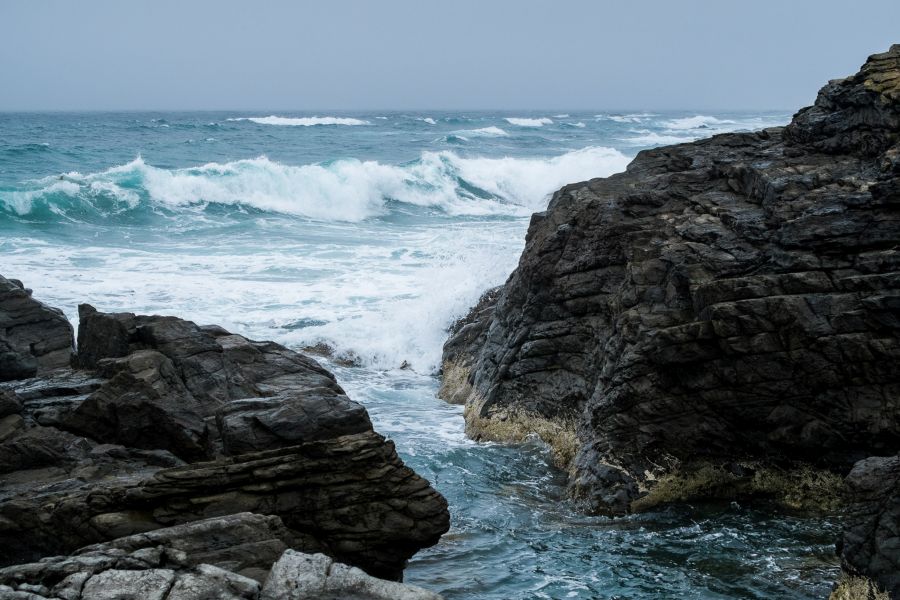
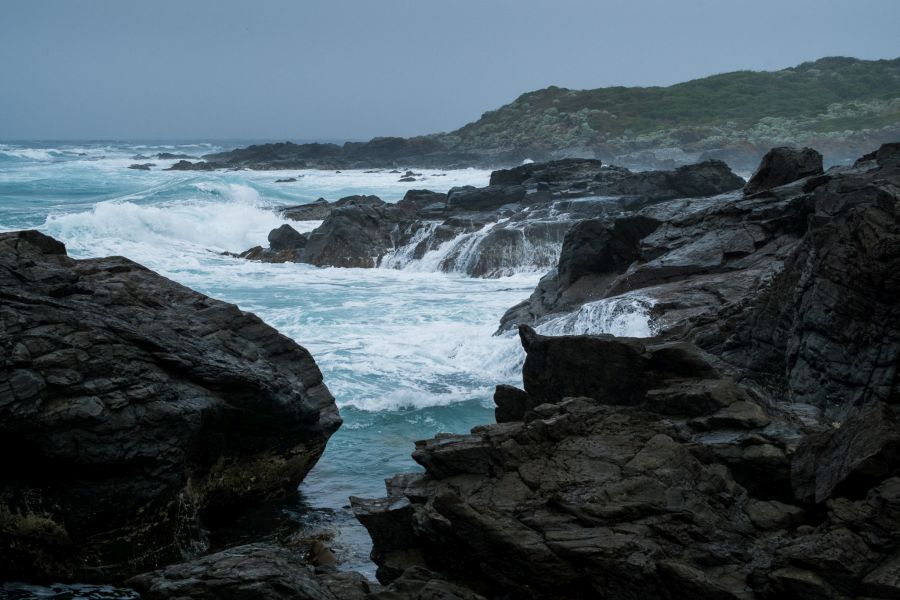
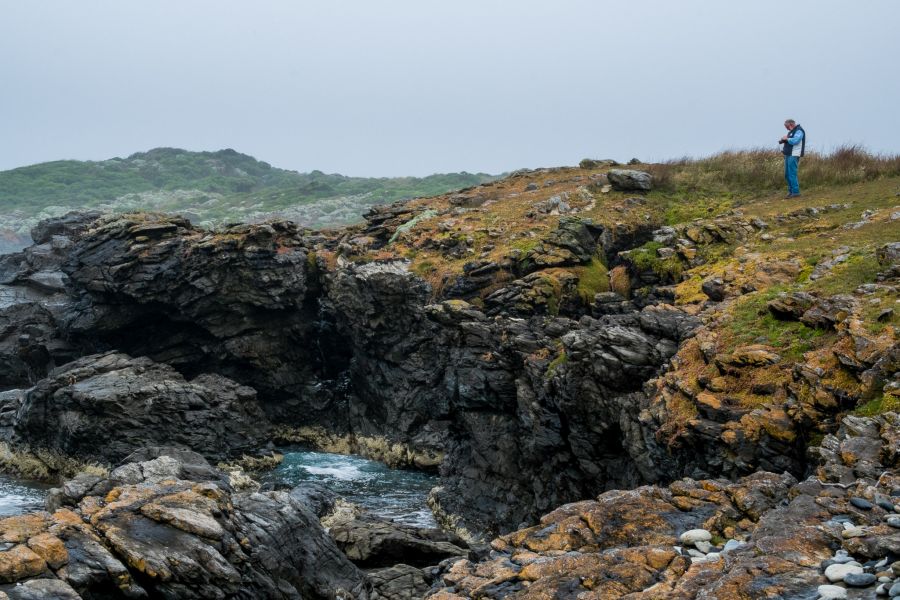
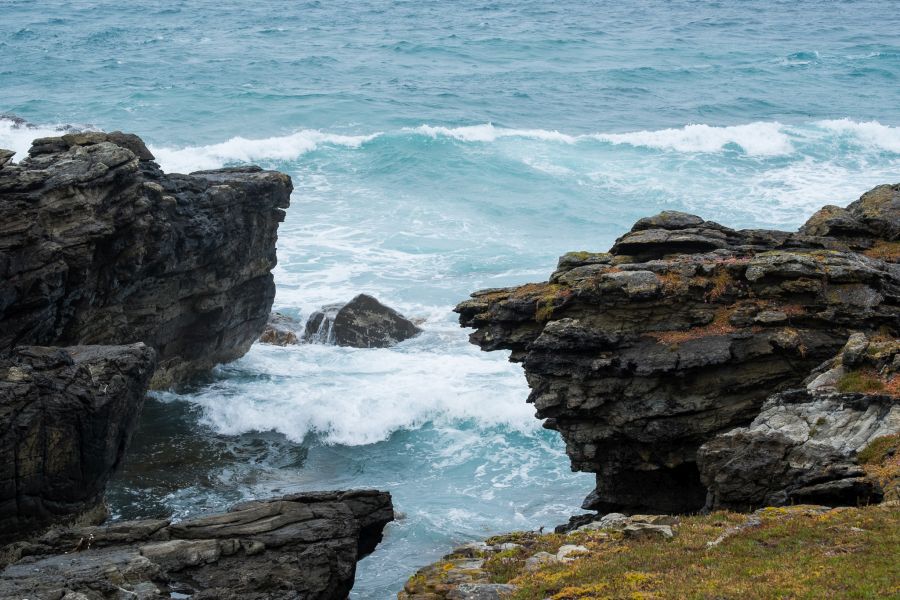
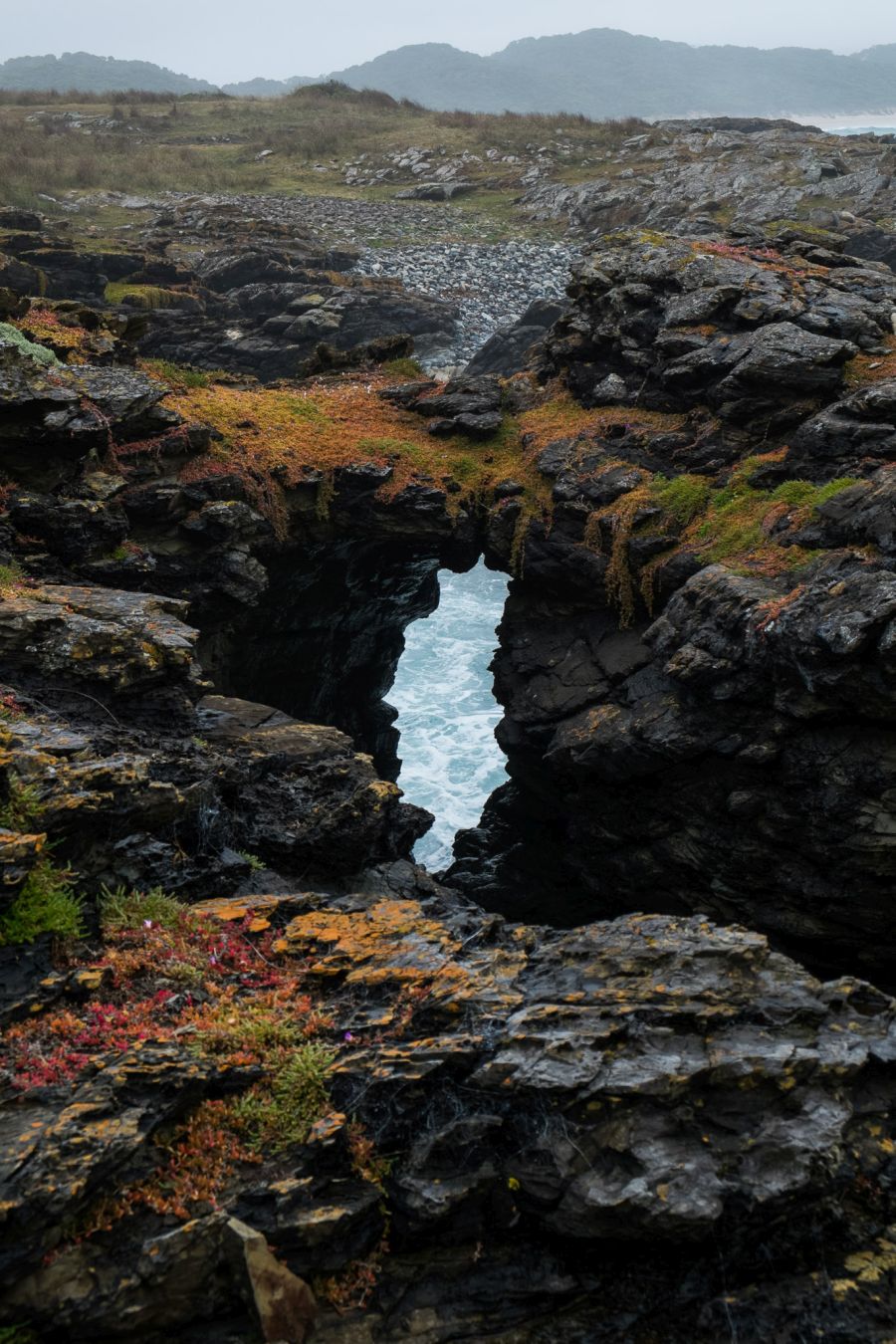
Always, on safari, make sure you watch where you walk – along the King Island coast, uneven terrain, loose and jagged rocks, hidden holes and getting too close to the cliff edge are all pitfalls for a preoccupied photographer.
Morning tea was served in a sheltered cove on the beach: Ian’s home-baked damper, still warm as he gently eased it out of its cast iron pot. He drizzled the damper with honey and cut it into thick wedges while Lucinda made us cups of strong tea or coffee.
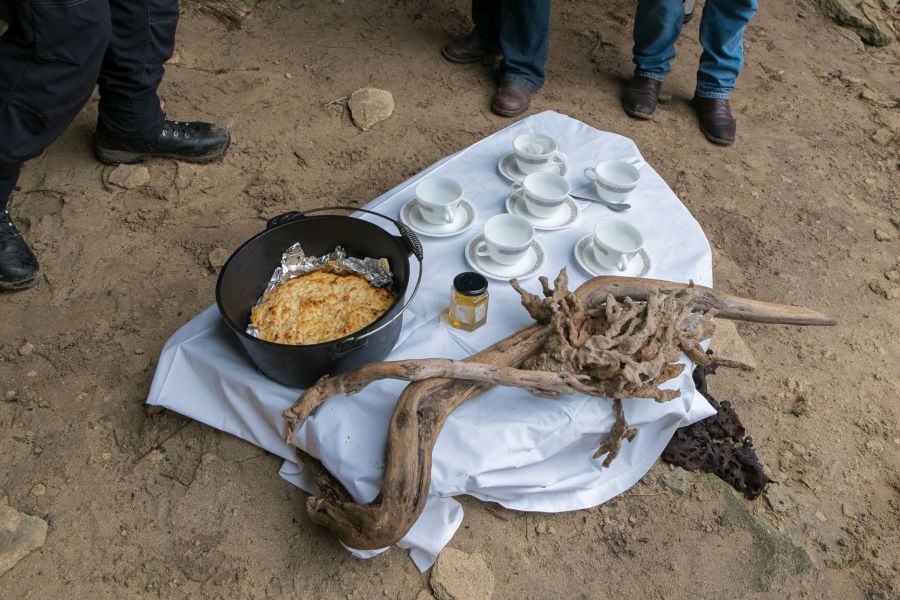 Morning tea – damper and cuppas all round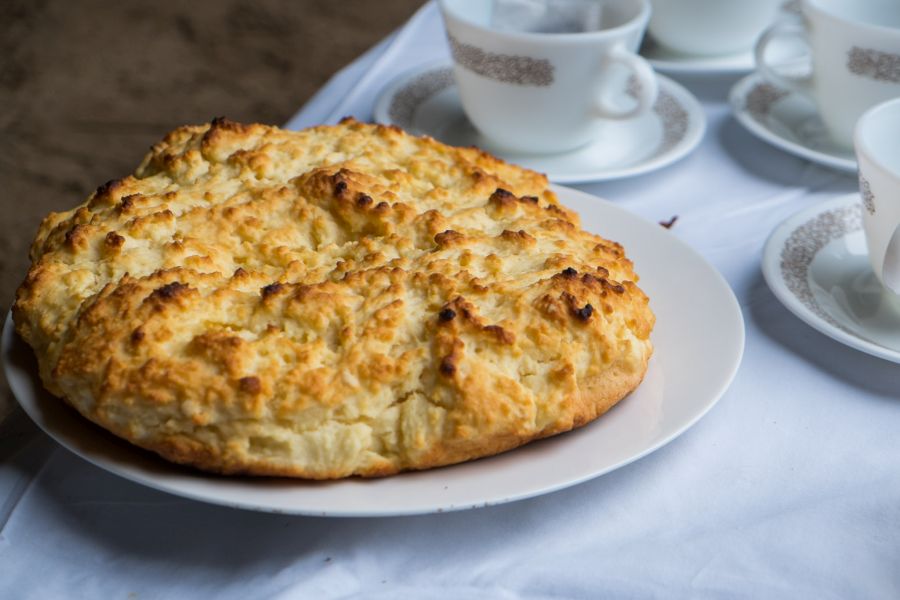
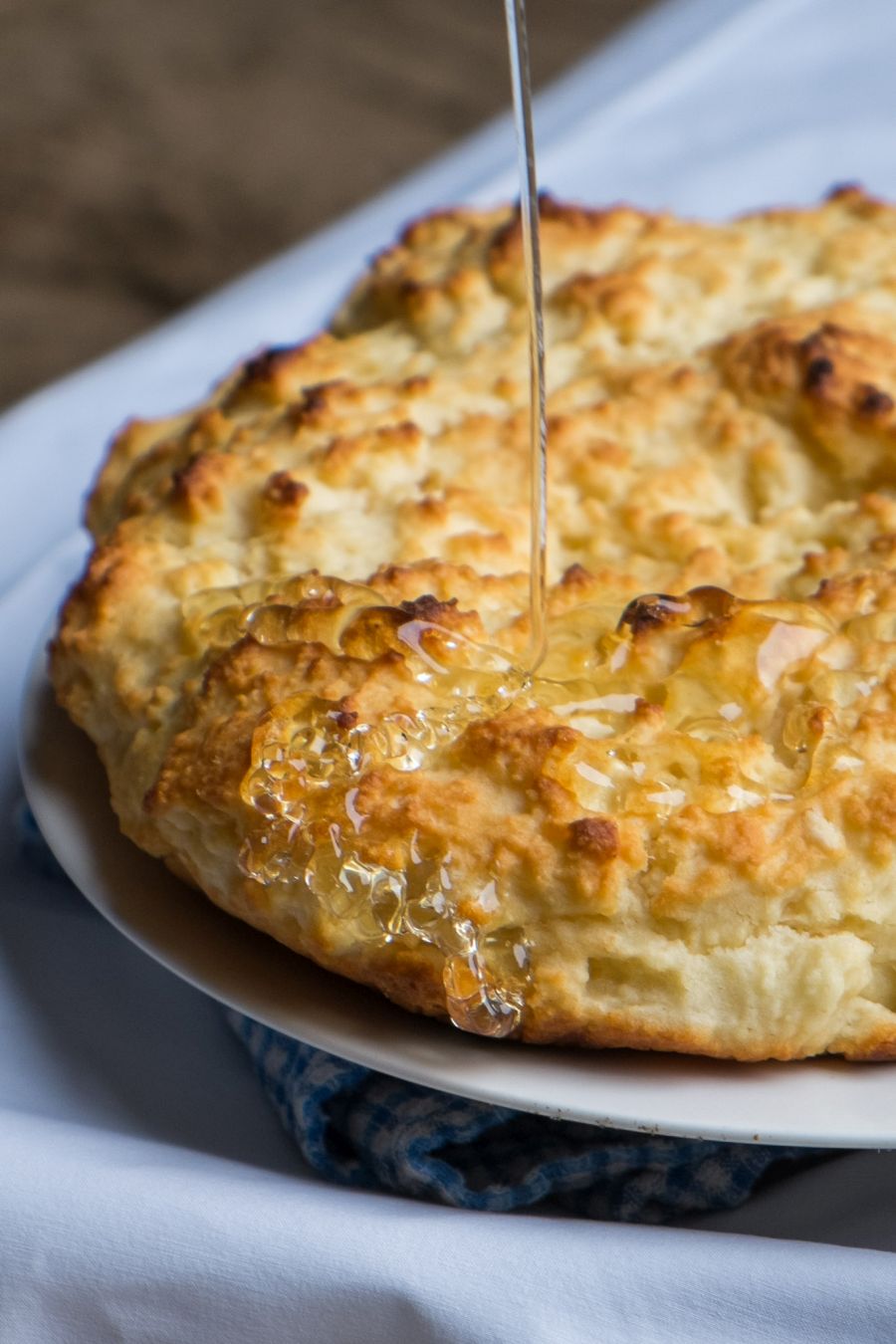 Ian drizzles honey onto the warm crusty damper.
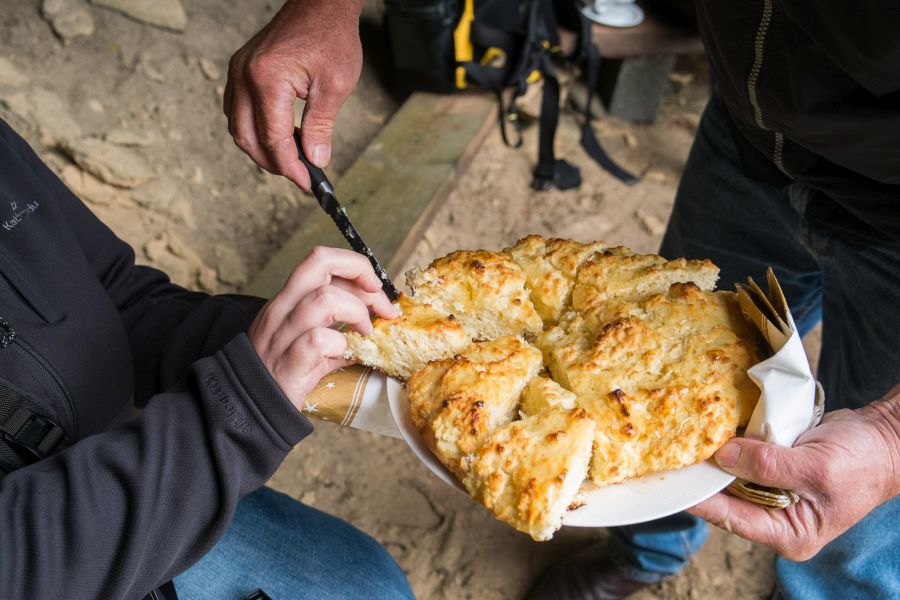 Damper drizzled with honey, served in thick wedges – well worth the sticky fingers!
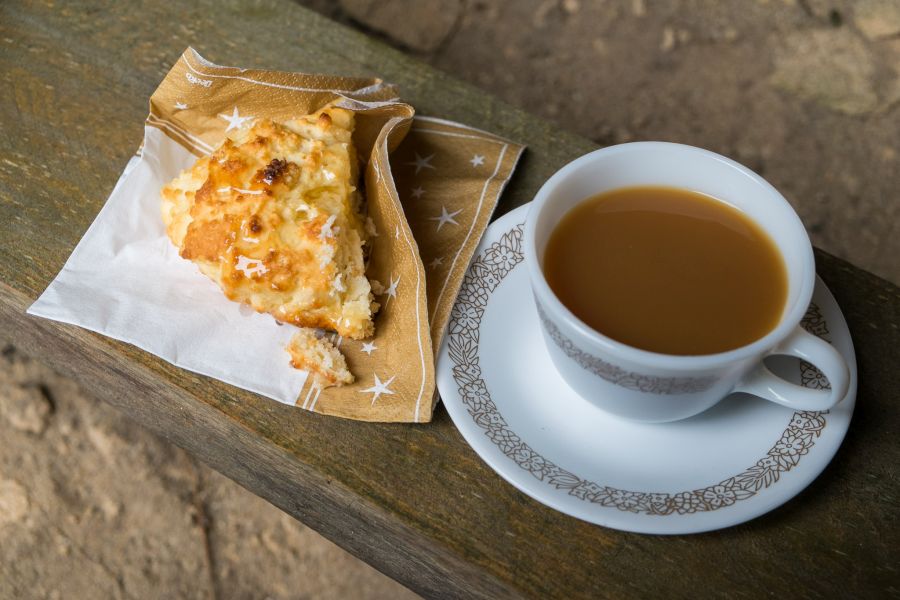 This was not my only slice!
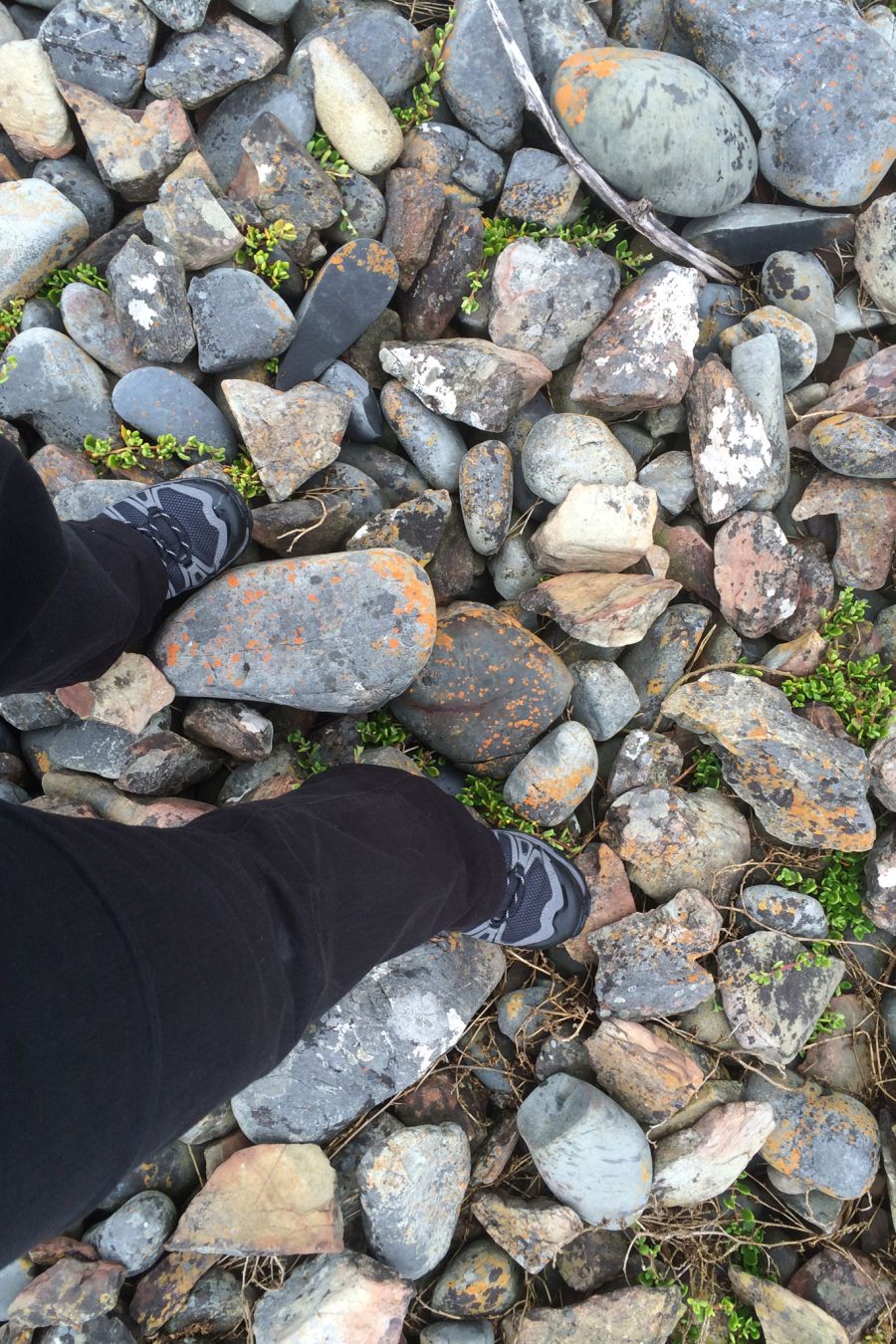 My hiking boots kept my feet dry, had excellent grip and gave me confidence to walk on uneven ground.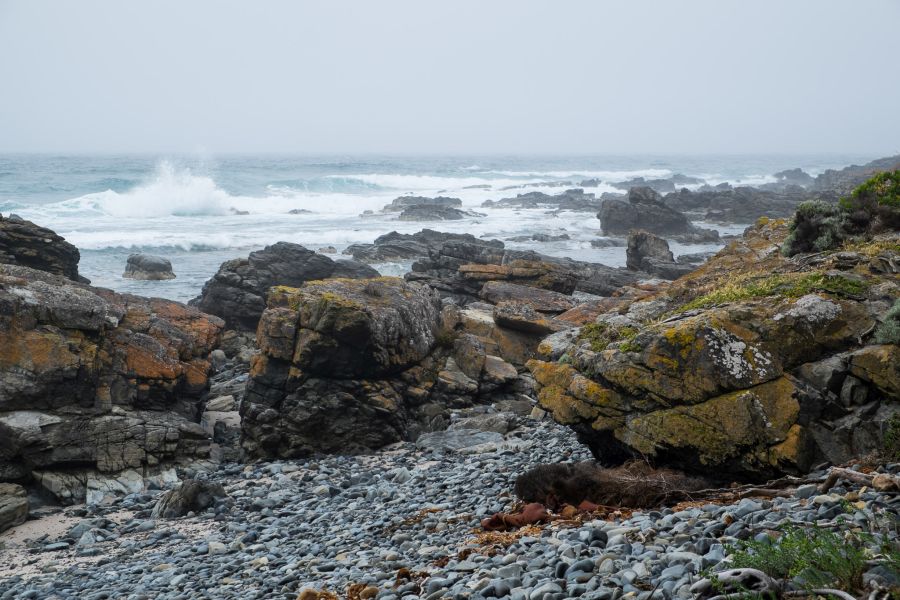
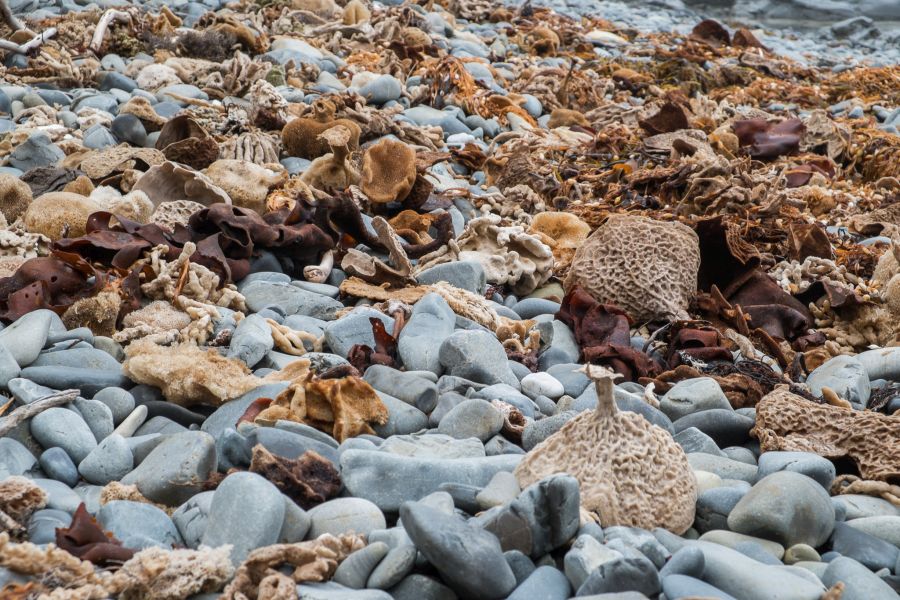

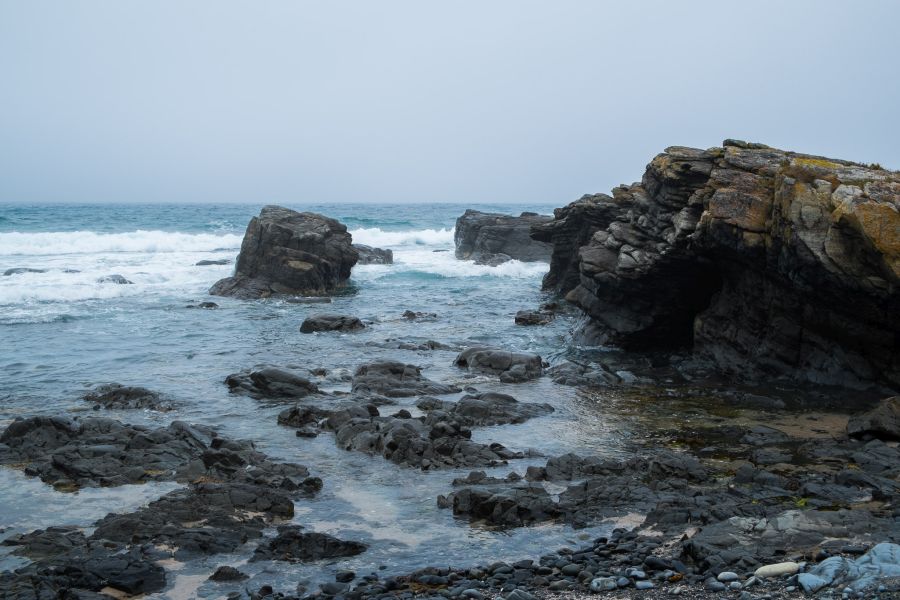
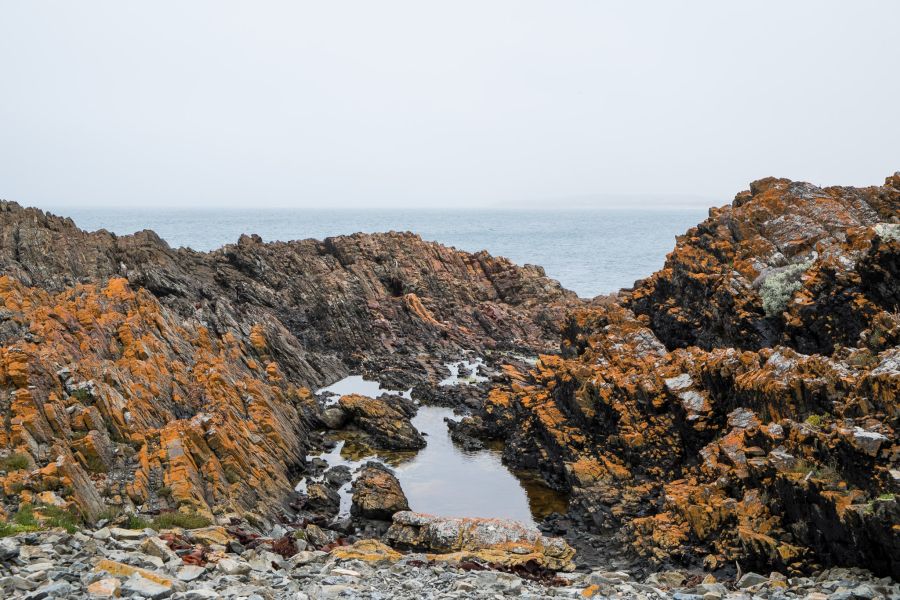
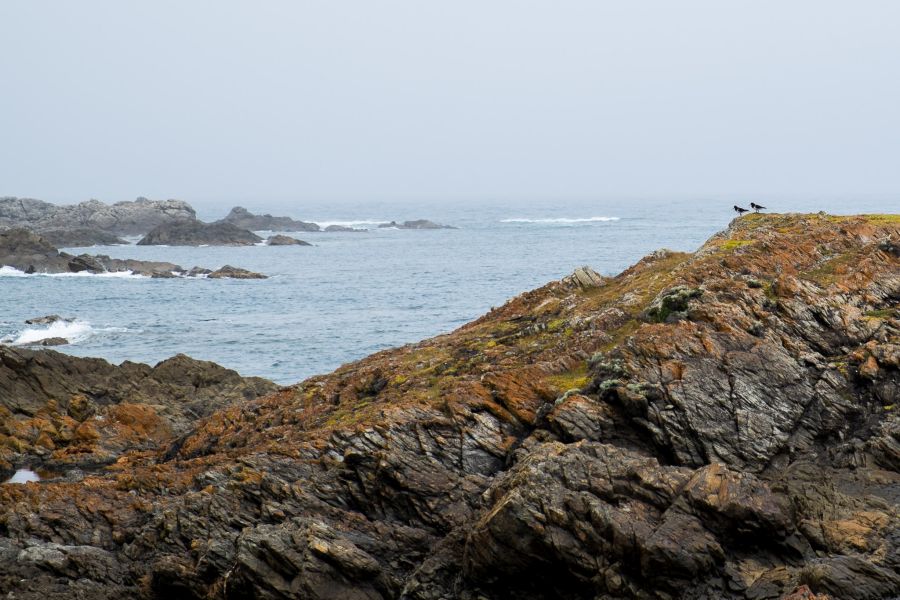 Can you see the pair of oyster catchers?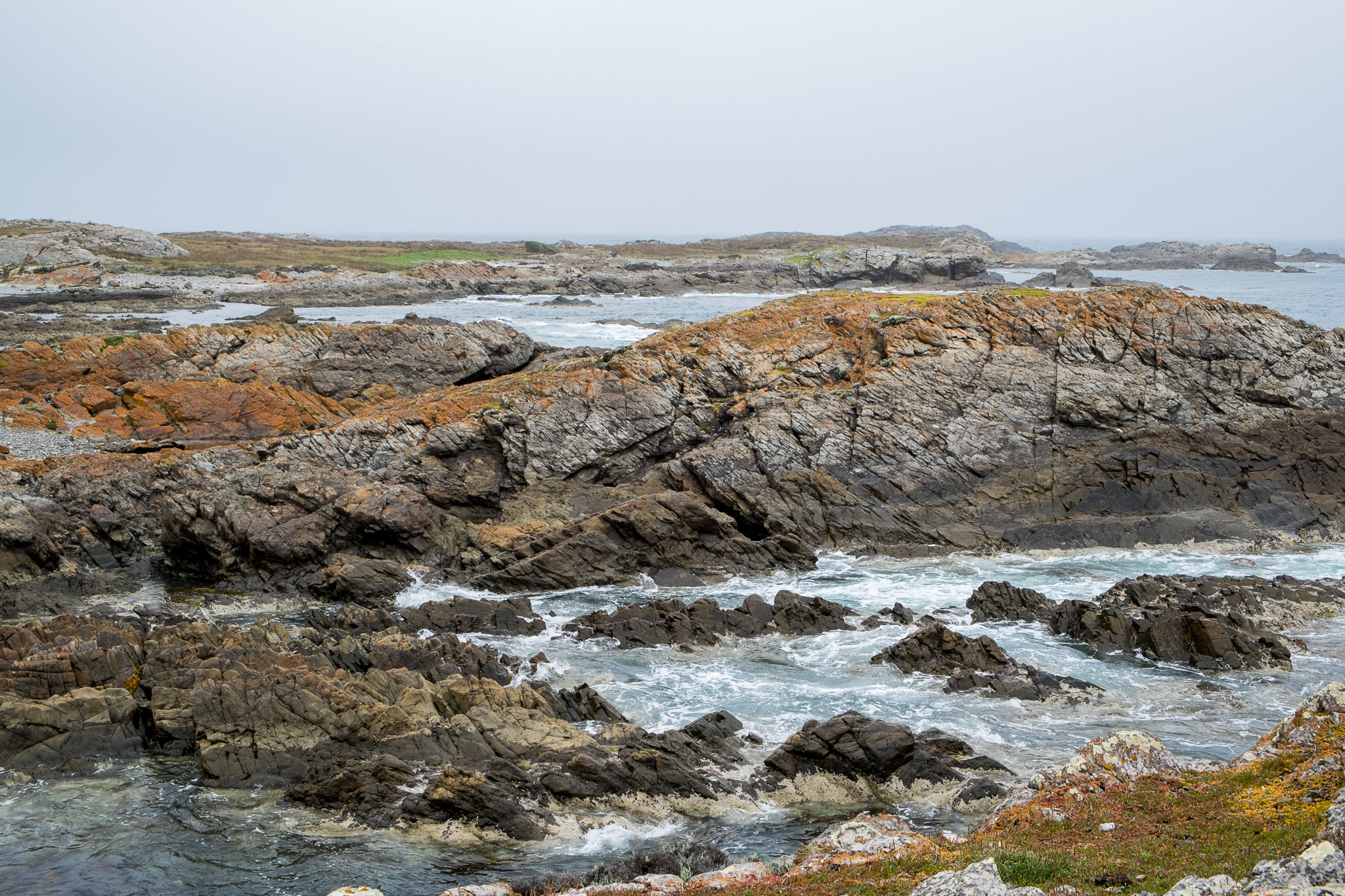
We drove to Seal Rocks State Reserve south west of the island, where Ian and Lucinda set up their mobile kitchen at the shack next to the car park to prepare lunch while we photographers walked up the bush path to see the Calcified Forest.
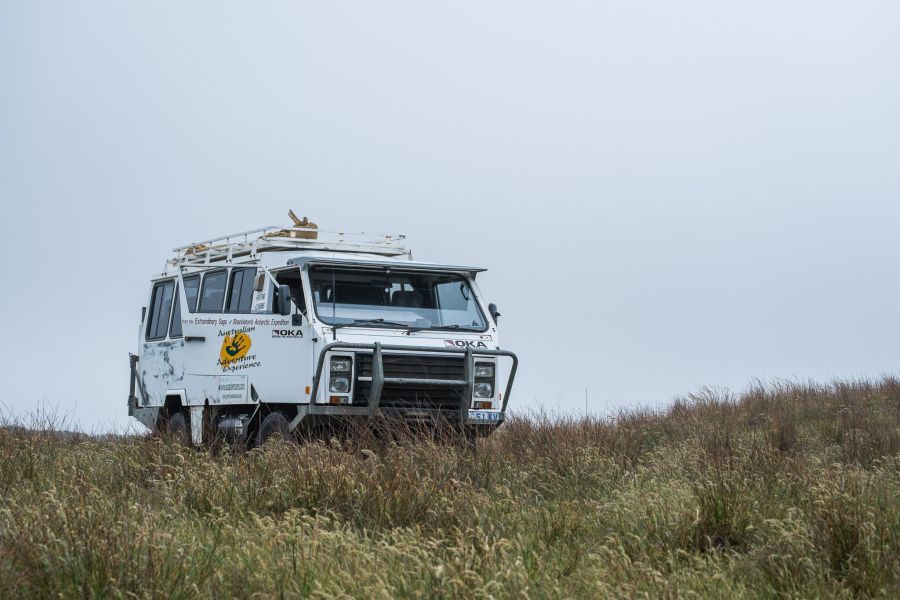
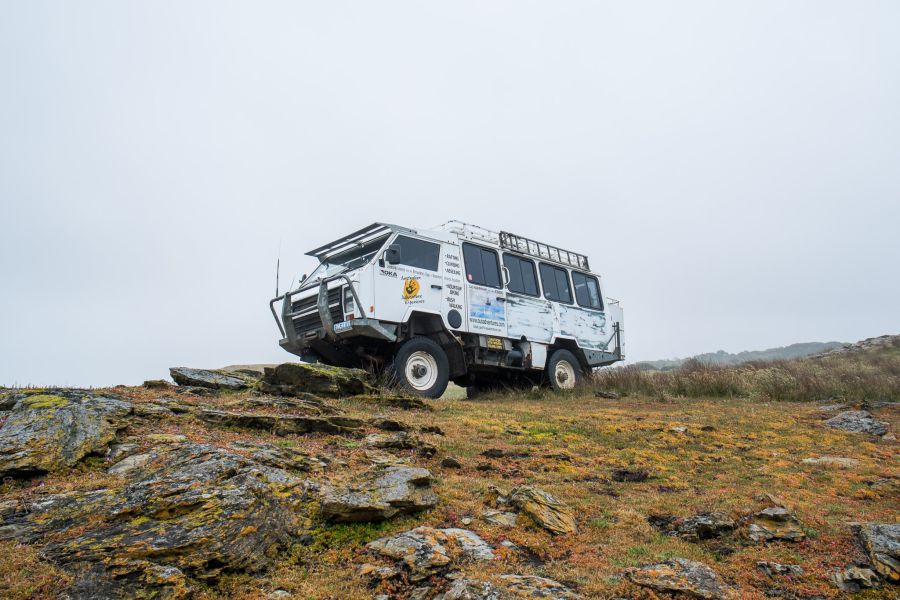
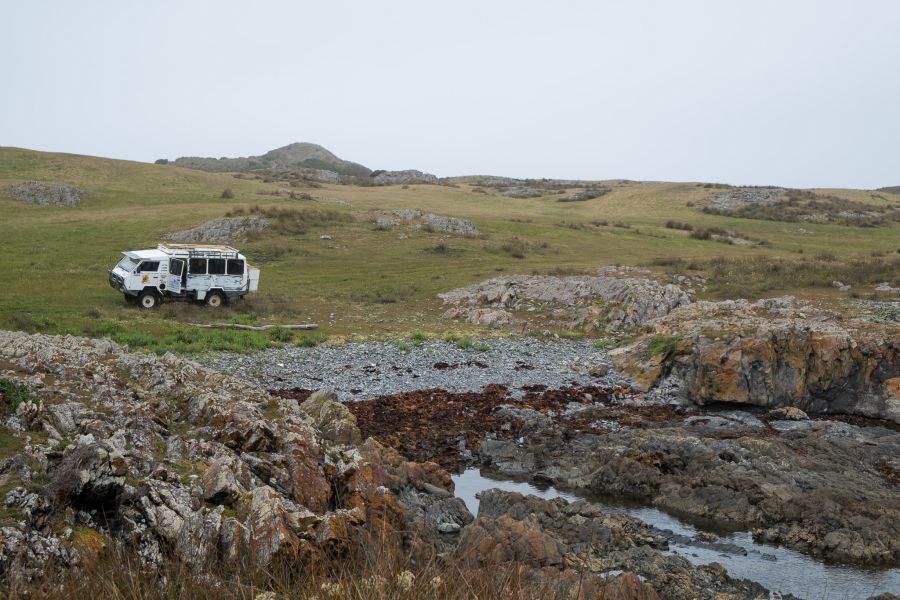
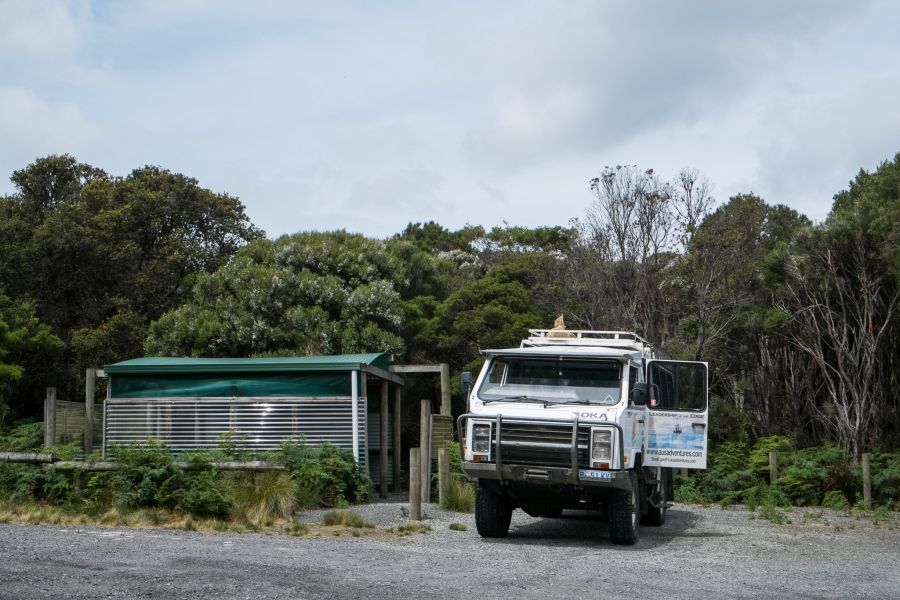 Ian parked the OKA next to the shack that would be our venue for lunch.
The walk to the Calcified Forest is easy if you’re reasonably fit. There is a small flight of steps up to the viewing platform. Despite the grey cloudy sky and cover from overhanging trees, and generally a day of jeans and jumper weather, the sun felt quite hot as we trudged up the path.
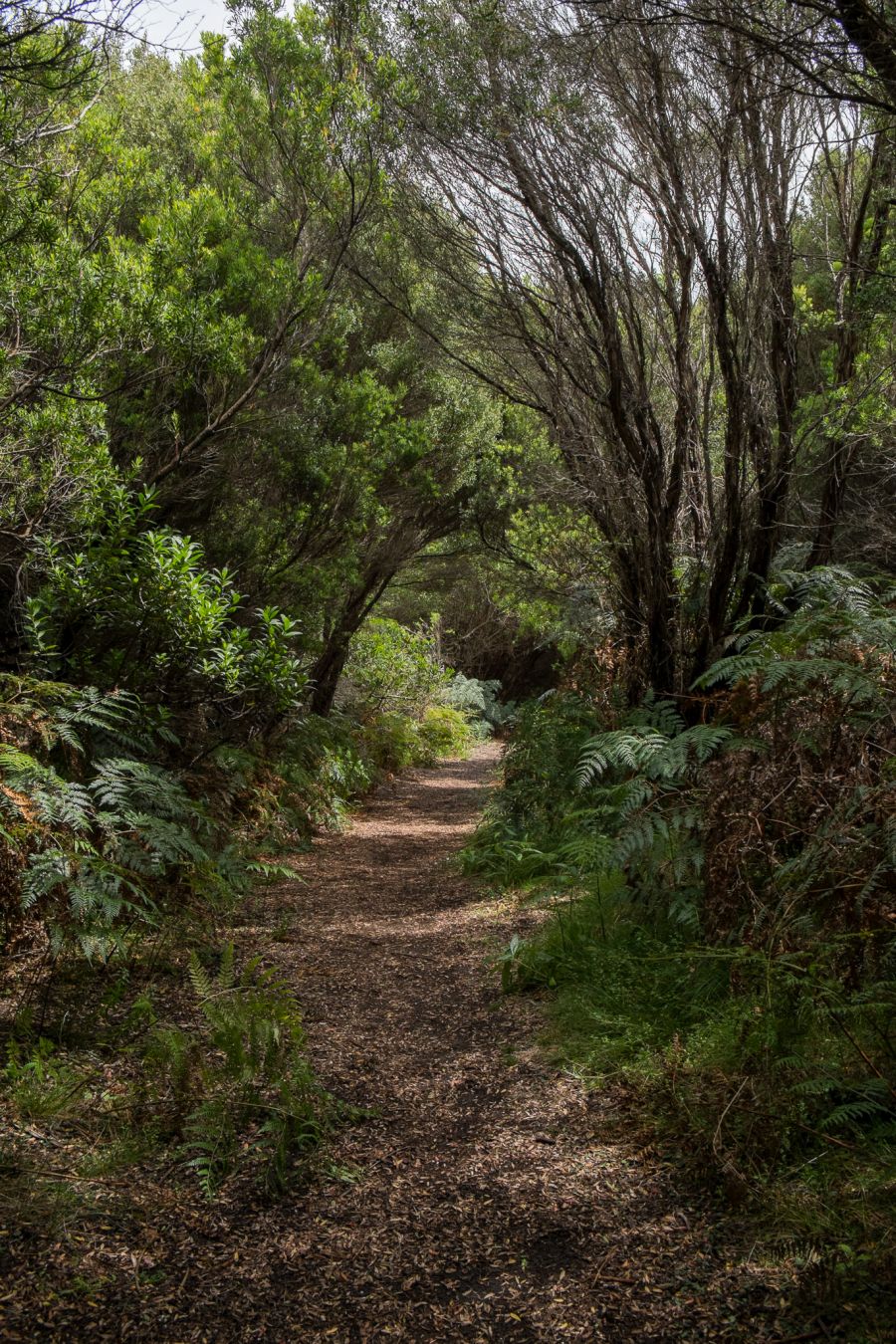 The trail leading to the calcified forest.
The Calcified Forest is a collection of ancient tree stumps and fragments left from a 7,000-year-old forest previously preserved under the lime-rich sand, now left exposed by the years of Roaring Forties winds from the Southern Ocean, which can be more than 100km per hour (remember, I mentioned it gets windy on King Island). The forest is like something out of a science fiction movie, the eerie landscape of a barren planet – a stark contrast to the lush green vegetation we’d just walked through.
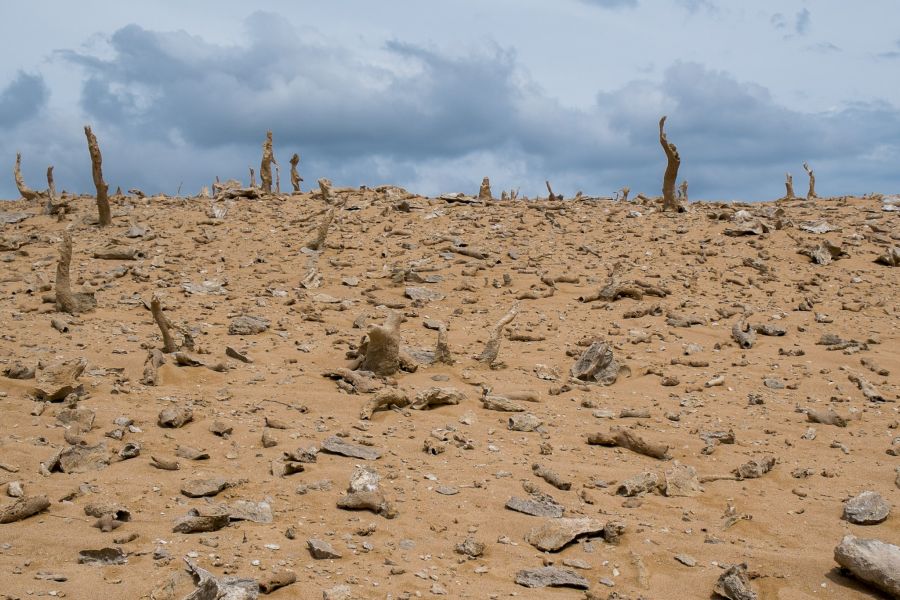 The Calcified Forest.
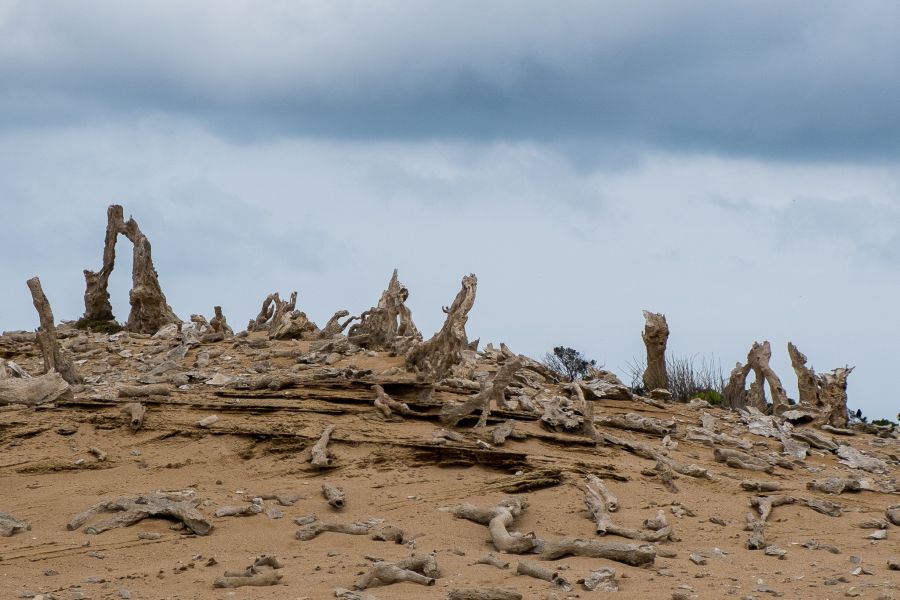 Vultures wouldn’t look out of place here among the ruins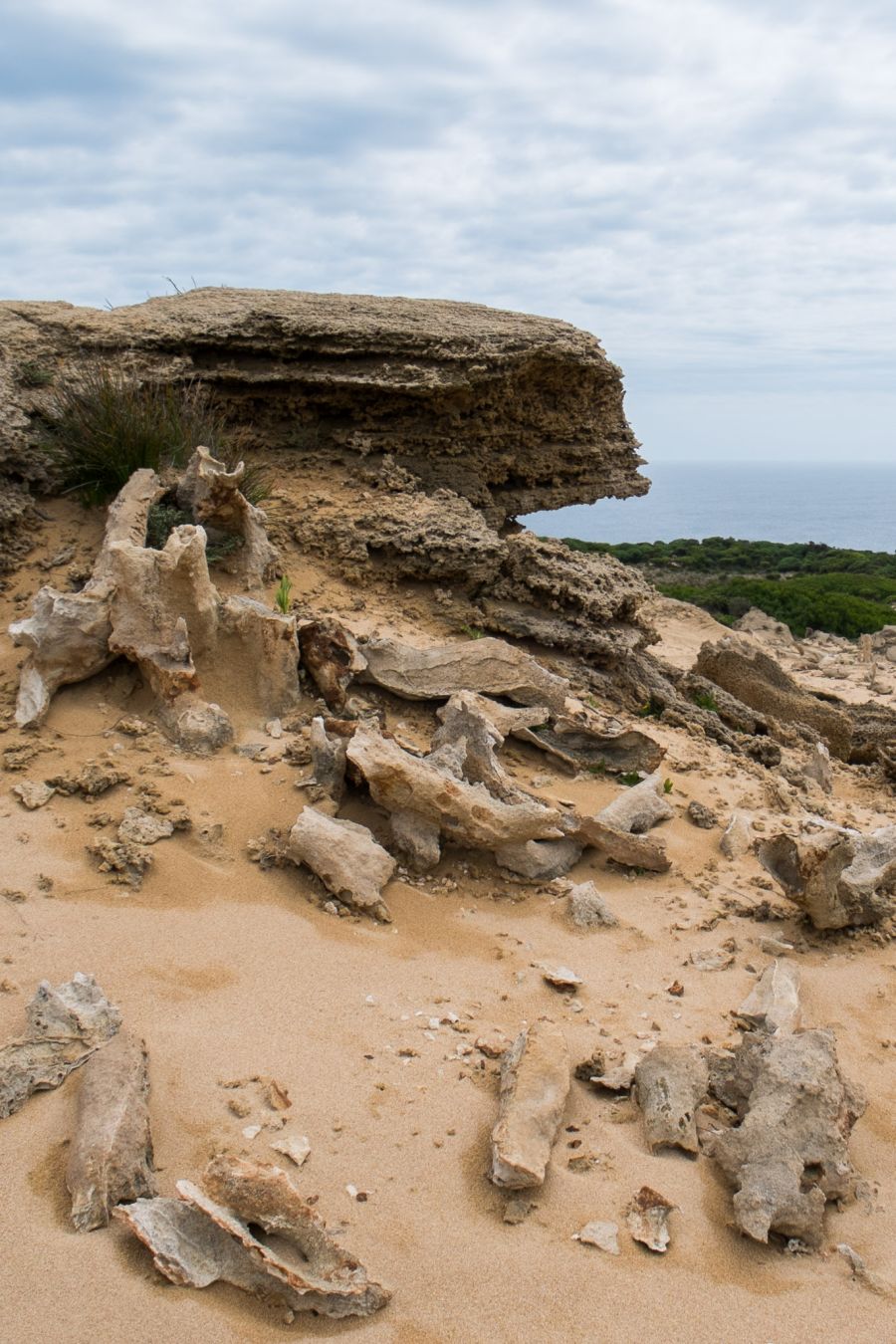
After photographing to our hearts’ content, we followed the path back to the shack where the table was set for lunch.
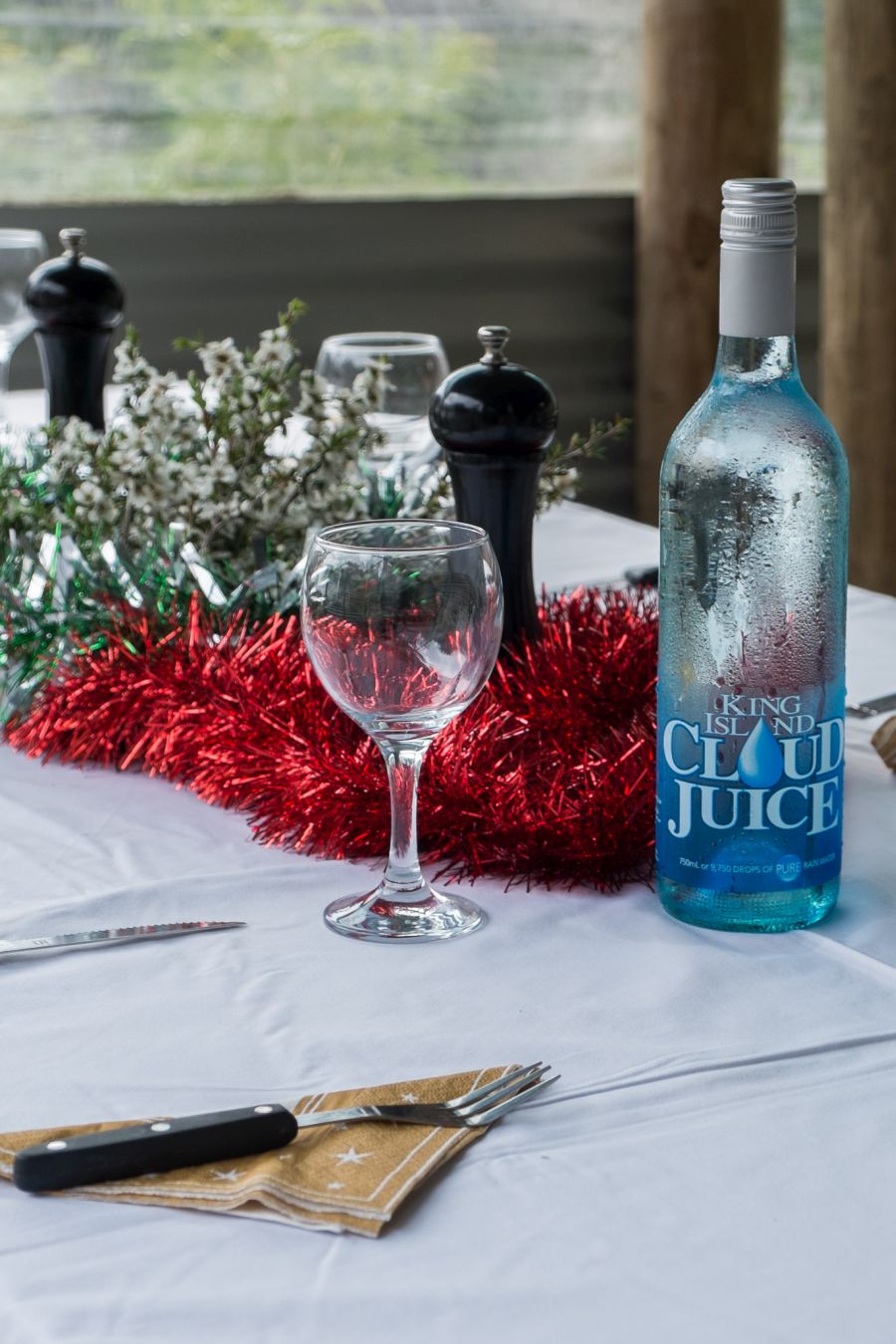 With each meal, we drank King Island Cloud Juice, bottled pure rain water from the island.
 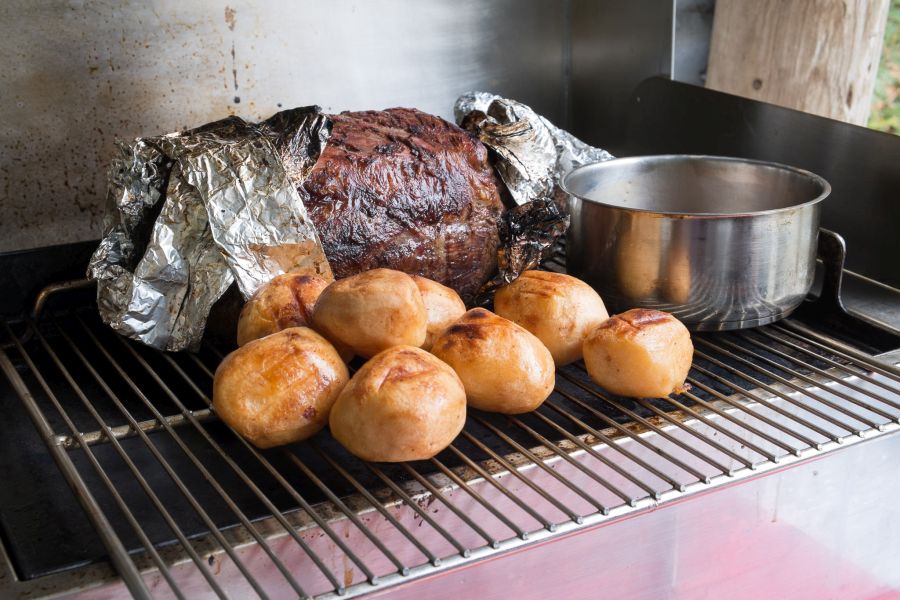 Roasted King Island beef and potatoes, gravy in the pan.
 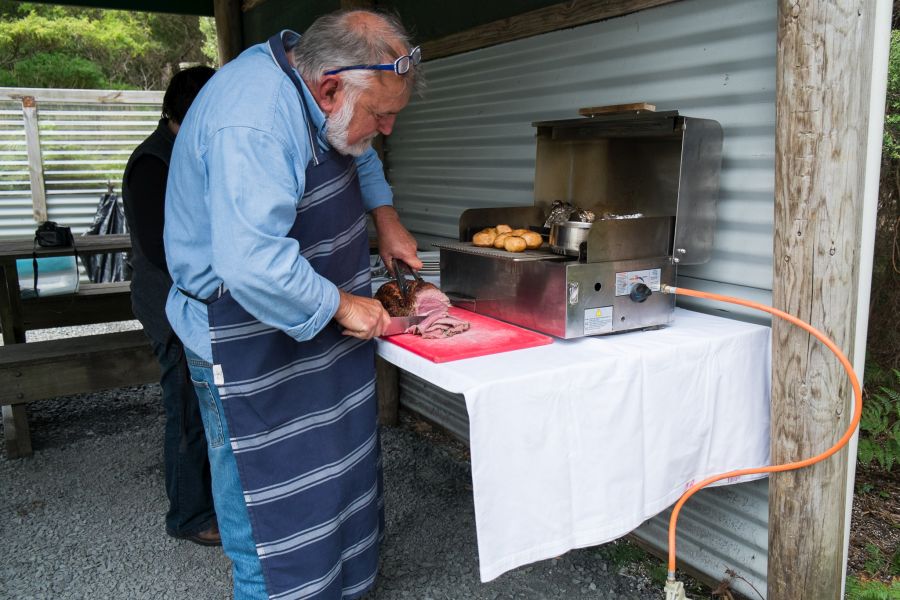 Carving the beef
Ian loaded up our plates with roasted King Island grass-fed beef with gravy and vegetables (carrots, green beans, potatoes and beetroot). At every meal, Ian spooned on sauces with a generous hand: two big dollops of sour cream on my roast potato, and more available if I wanted it.
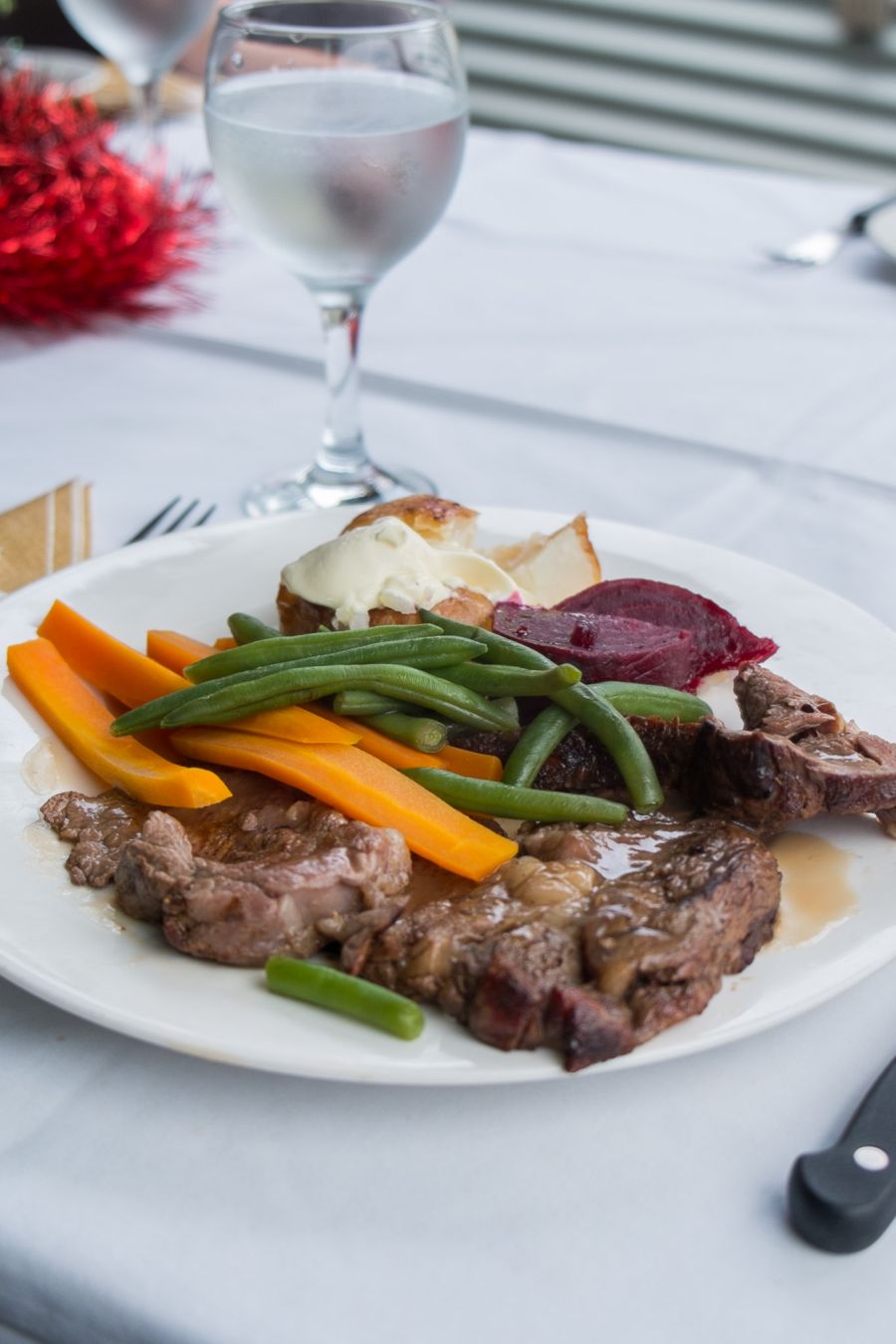 King Island roast beef – I gave my beetroot to Caroline. That’s what friends are for!
I’ve been a big fan of King Island Dairy cheese for years, but being on King Island and visiting the landmarks after which many of the cheeses are named deepened my appreciation.
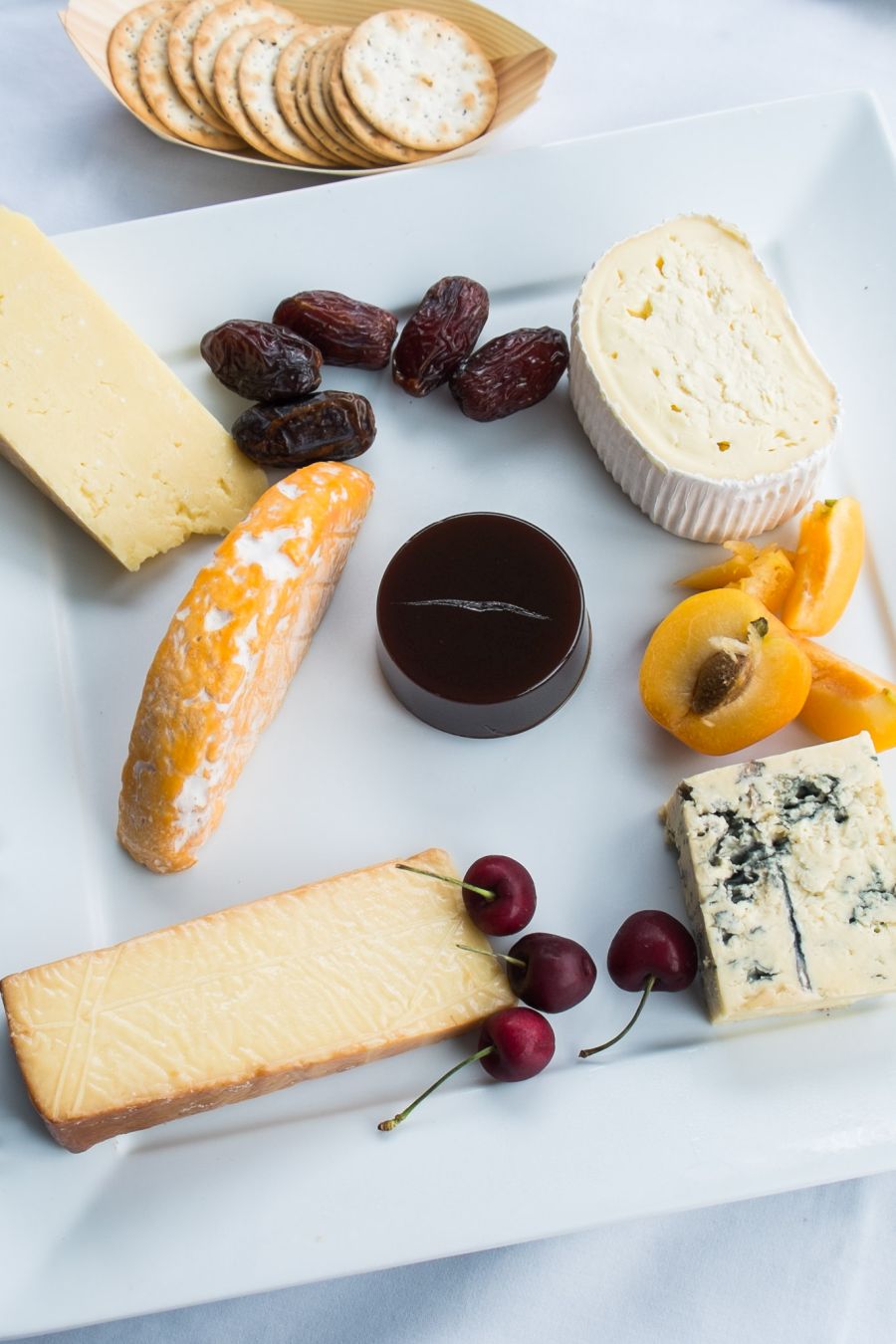 Eating King Island Dairy cheese on King Island – what could be better?
 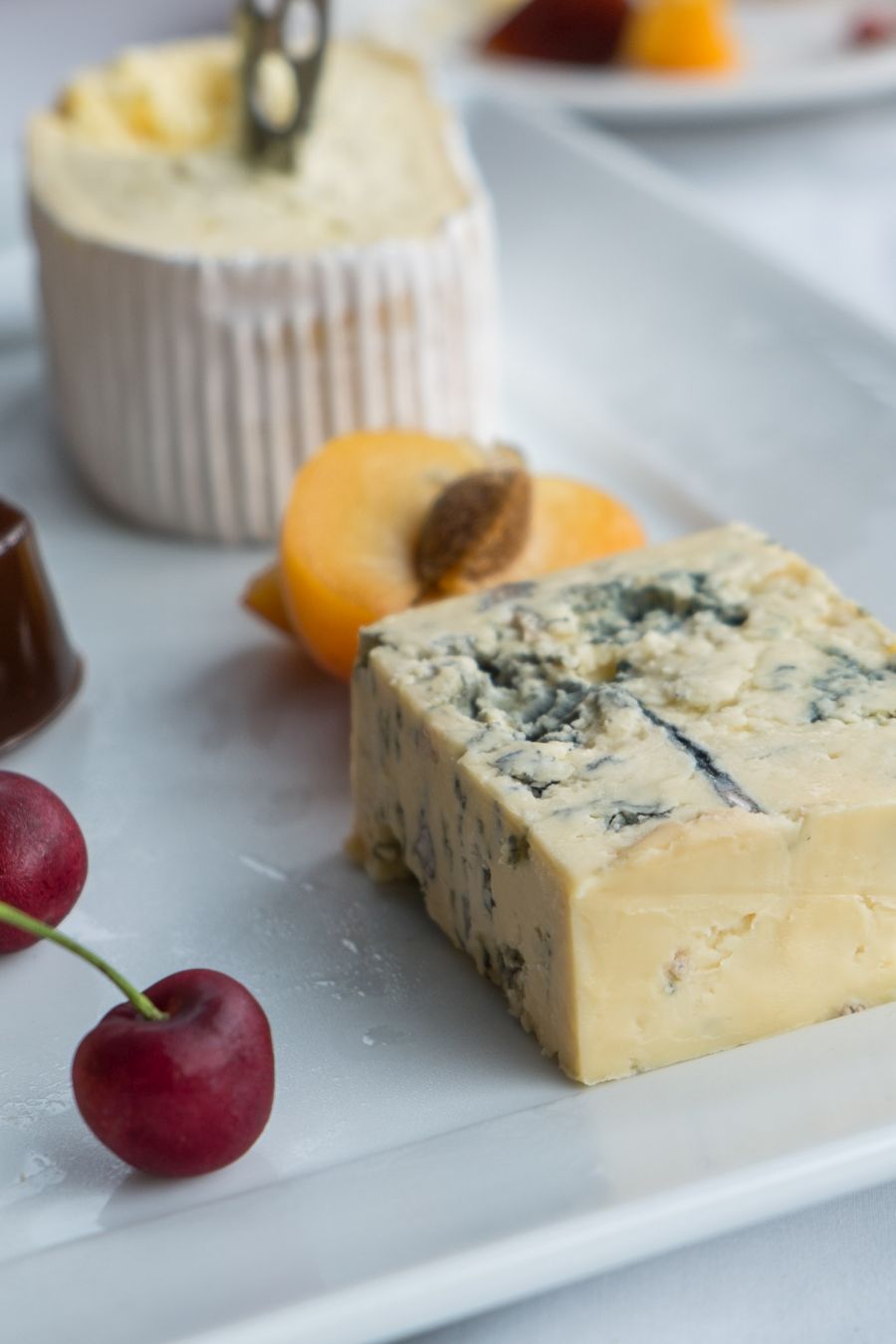 King Island Roaring Forties Blue – one of King Island Dairy’s most famous creations, creamy and sublimely stinky, named after those also famous westerly winds.
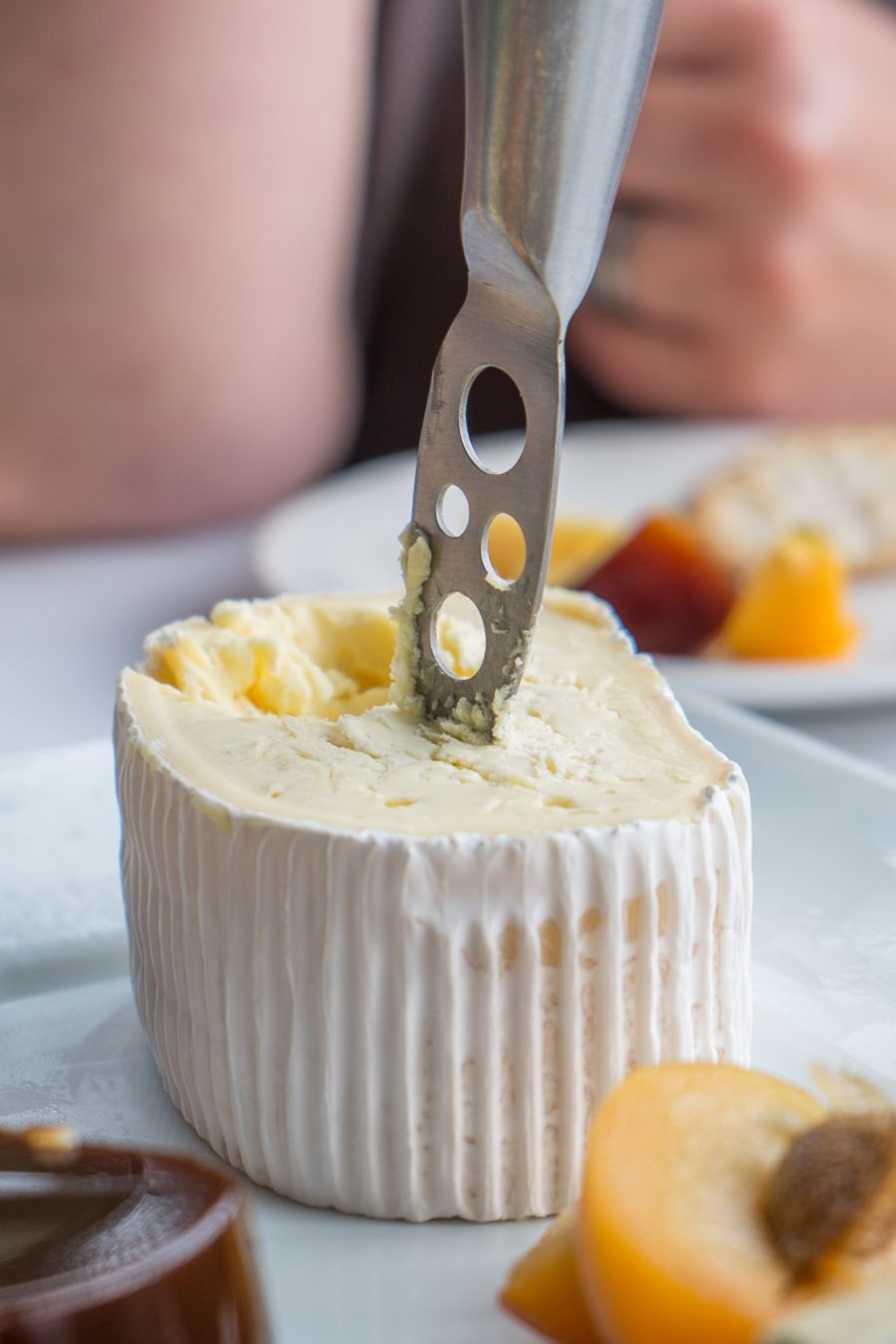 Seal Bay Triple Cream – magic words, ‘triple cream’! Buttery and rich, named after Seal Bay, christened in the 1800s for its abundant seal population.
 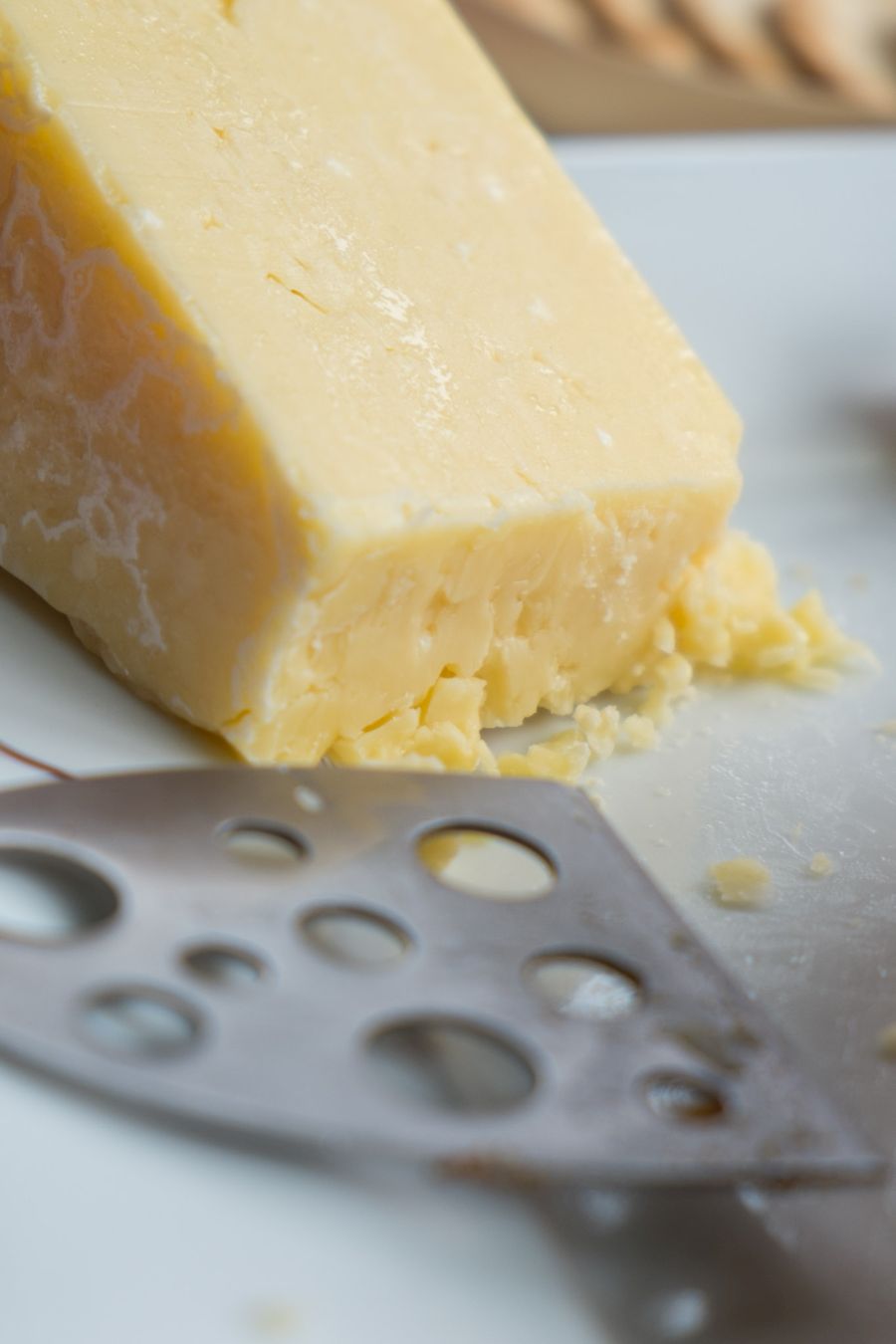 Our favourite – Surprise Bay Cheddar, slightly crumbly and matured for 12 months, named after Surprise Bay on south west King Island. Good as is, magnificent in a toastie.
 Ian should think about offering the King Island Cheese tour, with an itinerary that begins at the famous dairy and takes you to all the places the cheeses are named for. Enjoying a glass of sparkling wine with Cape Wickham Double Brie as you visit the Cape Wickham Lighthouse, the tallest in the Southern Hemisphere; travelling to the southern tip of the island to enjoy Stokes Point smoked cheddar with crisp sweet apple, and munching on Surprise Bay cheddar and crackers at Surprise Bay…what do you reckon?
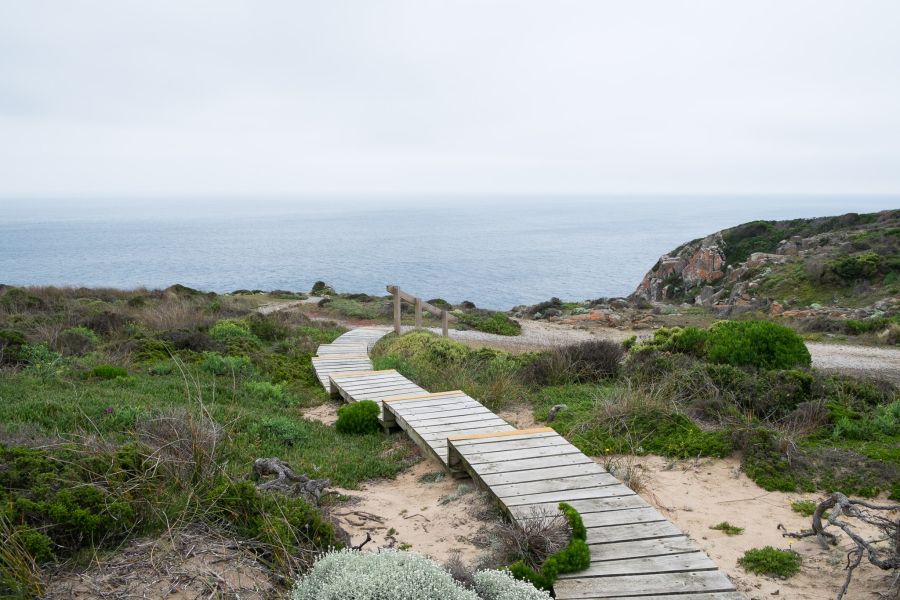 If you’re lucky, you may spot a penguin or two hiding under the deck… have a look!
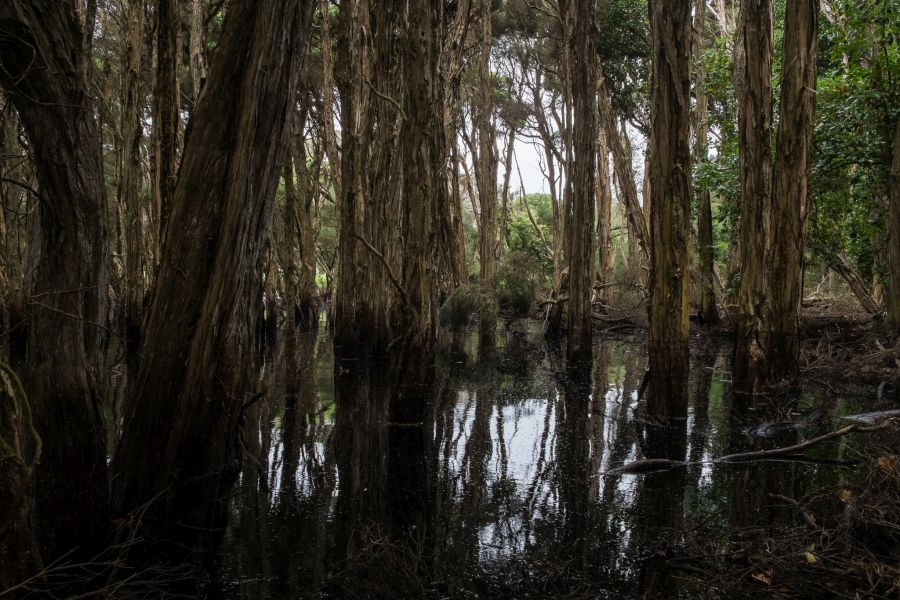
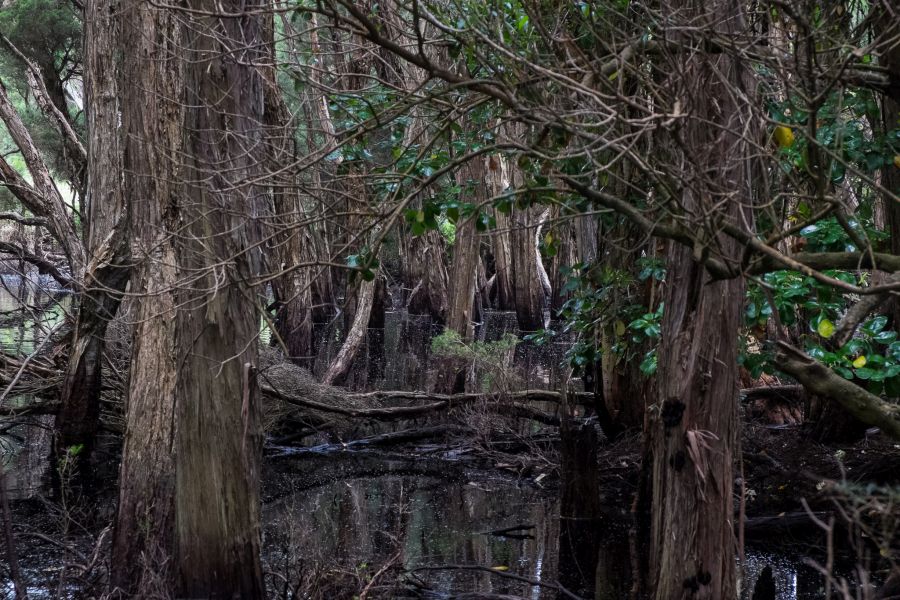
 More shots of the landscape awaited after lunch, despite lingering thoughts about a post-lunch nap. The more I photographed the rugged coastline, the more I could see why these waters have been so treacherous to ships, especially during the 19th century. Tomorrow, we’d visit the shipwreck site of the Shannon, and photograph Cape Wickham lighthouse. For maritime history buffs, Ian and Lucinda offer a Shipwreck and Lighthouse History tour of King Island.
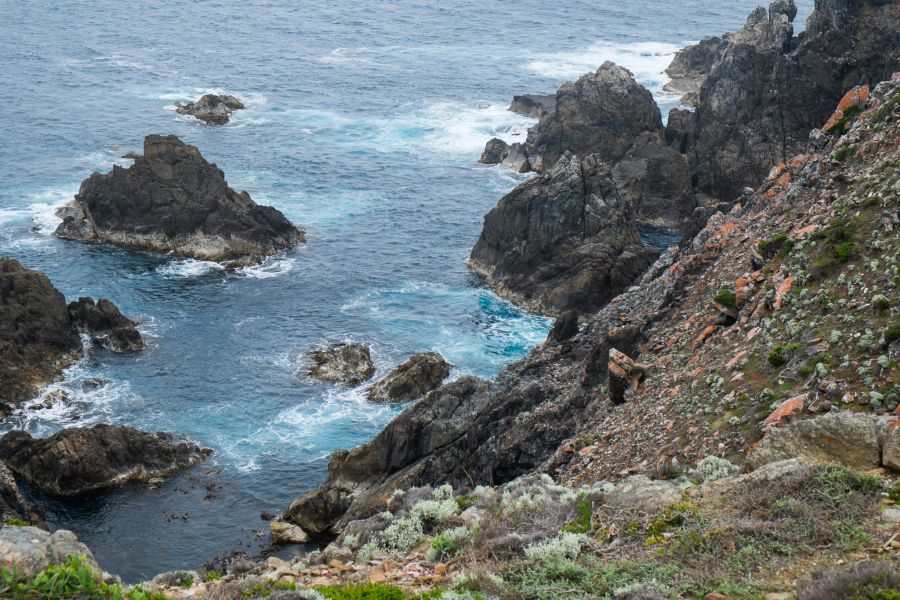
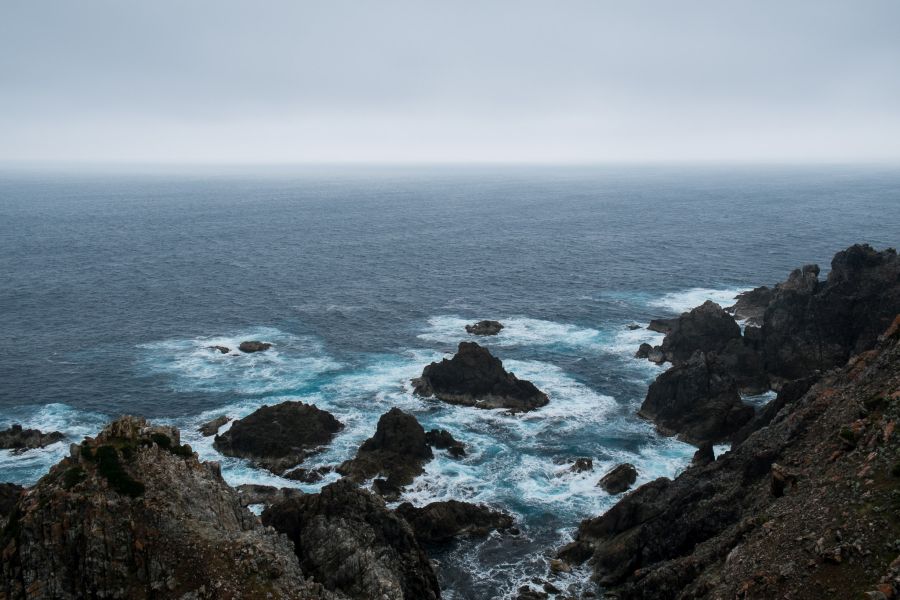
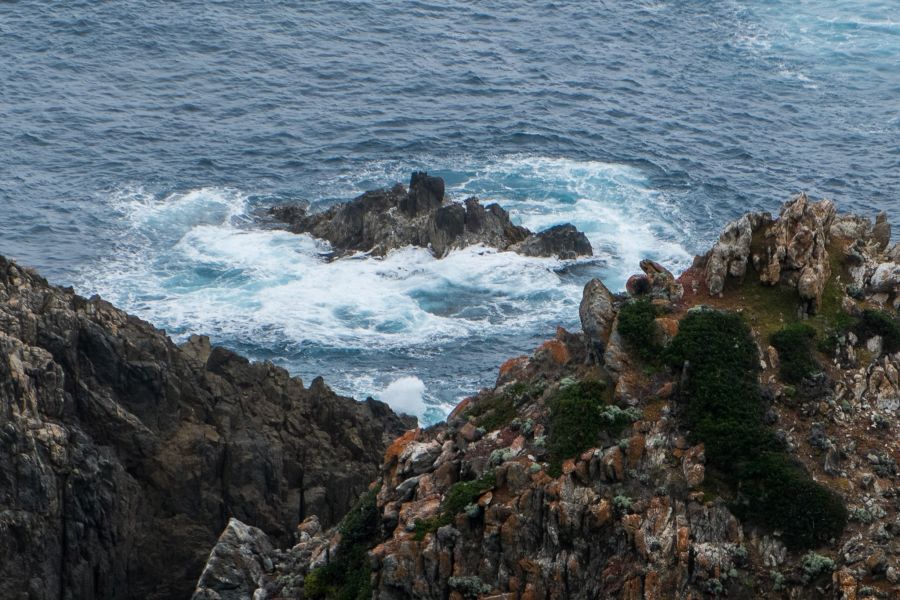
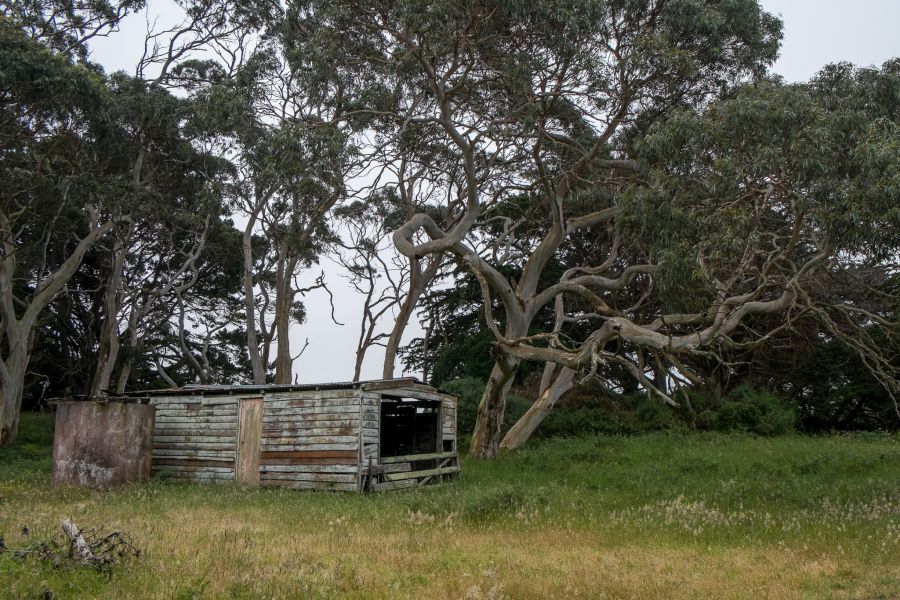 Even a rickety old abandoned shack proved interesting to photograph.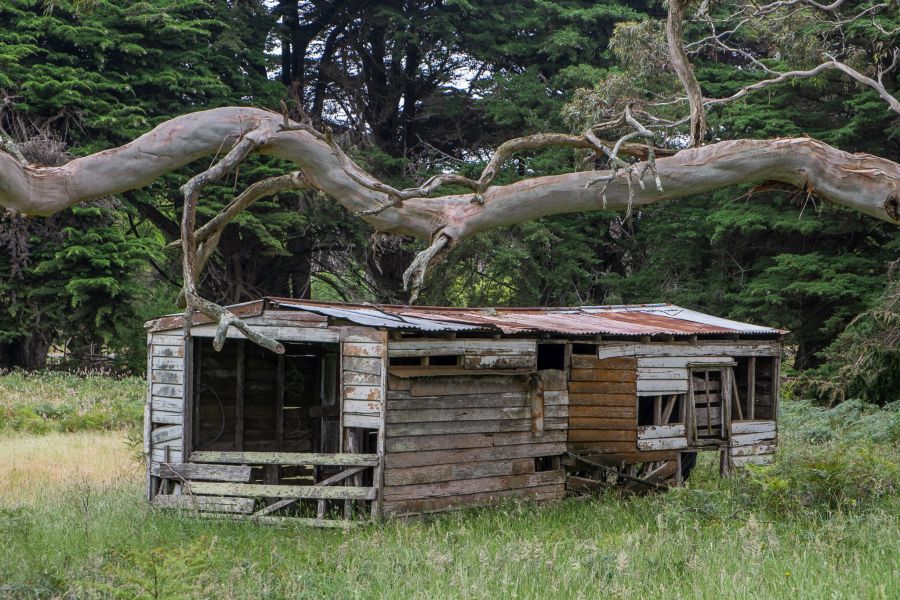
Back at our accommodation for dinner, another spectacular meal: for each of us, half a crayfish, caught locally that day, served in its shell with homemade Mary Rose sauce, salad and a wedge of lemon. Cracking open the legs to extract the sweet flesh within is juicy, messy work which I’m not terribly good at – I definitely needed a bib or plastic poncho, and probably another shower. Perhaps I just need more practice.
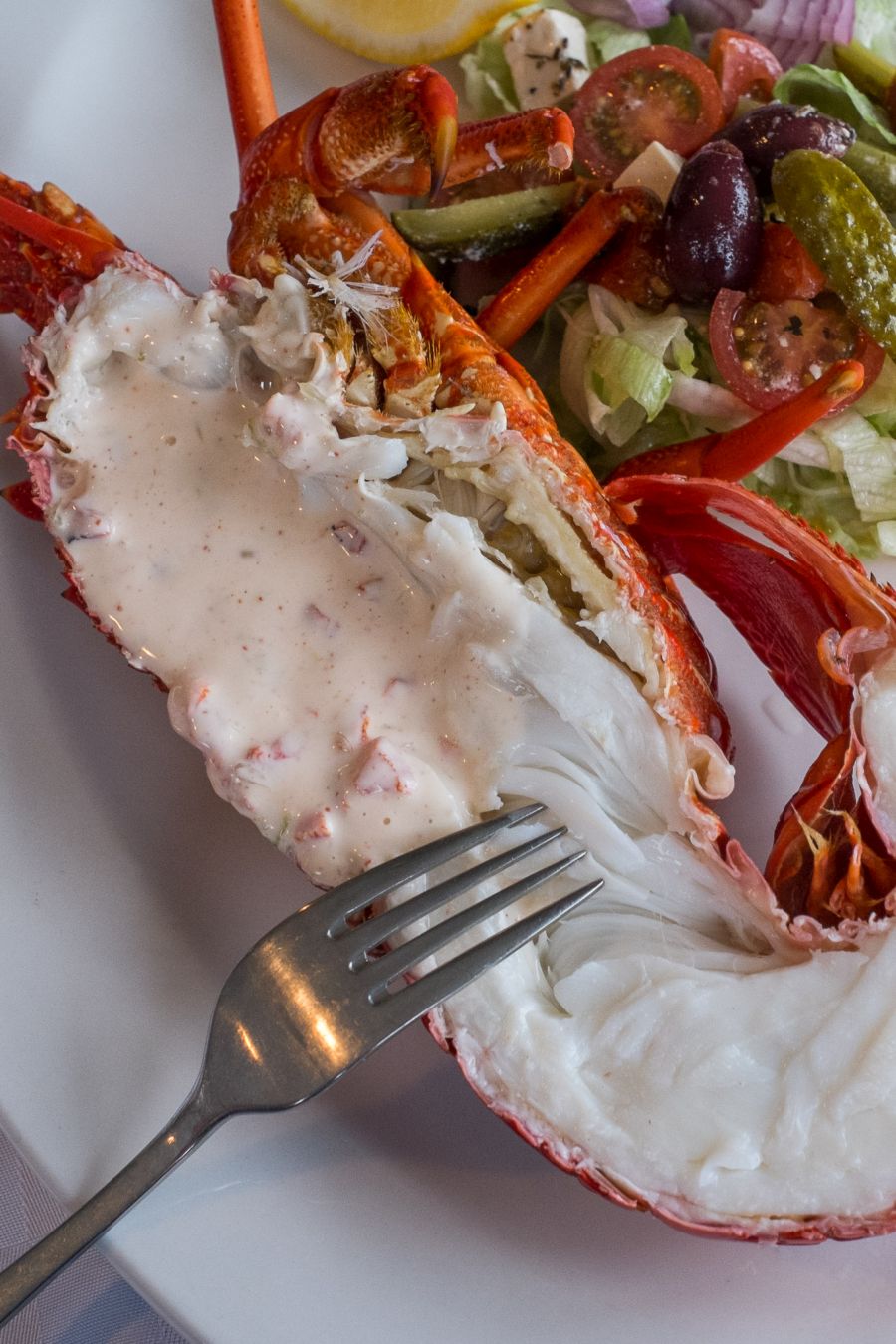 King Island crayfish with homemade Mary Rose sauce.
And if we weren’t already impressed, for dessert, Ian presented his homemade meringue roulade rolled in cinnamon sugar and flaked almonds, served with vanilla ice cream. “Hope youse like it,” he said, genuinely modest. Like it? We loved it.
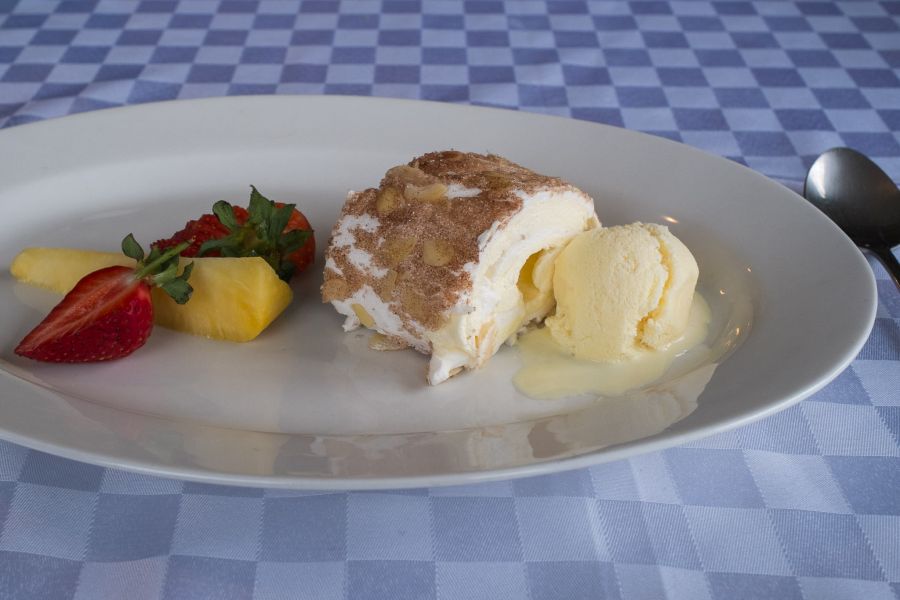 Ian’s homemade meringue roulade – the meringue melted in the mouth.
 I don’t know which made me happier – photographing and experiencing the wild beauty of King Island, or eating the fantastic food every day of the safari. Either way, I was glad to share the experience with friends.
The complete King Island photography safari series
King Island
- King Island is located in Bass Strait between the states of Victoria and Tasmania, Australia (it is a part of Tasmania).
- The island is 58km long and 21km wide. There is no public transport on King Island, but car rental and guided tours (4WD, private small bus) are available.
- The population of King Island was 1,566 at the 2011 Census.
- Telstra Next G is the only mobile service on the island.
- Find out more about King Island:
King Island Tourism
Getting to King Island
- There are no passenger ferries to King Island. The only options are to fly from mainland Australia via Melbourne or from Tasmania via Wynyard or Launceston. See more on how to get to King Island.
- We flew to King Island via Melbourne on Regional Express (Rex) Airlines.
- The flight is approximately 50 minutes. Passengers are served a sweet or savoury snack and a drink of water.
King Island Photography Safari by King Island Holiday Village and Tours
This trip wasn’t sponsored – we paid for everything ourselves. We got in touch directly with Ian and Lucinda via their website and organised a tour from 21 to 24 December 2014 (4 days/3 nights).
We paid AU$2088 per person which included:
- Return flights Melbourne to King Island (I travelled to Melbourne from Perth; Craig and Caroline came from Sydney)
- 4 days touring King Island in the all-terrain, air-conditioned OKA vehicles
- 3 nights accommodation in a queen ensuite room
- 3 x two-course dinners featuring King Island produce
- 3 lunches, including a couple of fantastic meals cooked outdoors on location
- 3 morning teas
- Continental breakfast every morning
King Island Holiday Village and Tours
King Island Holiday Village offers a range of accommodation options
We stayed at King Island Motel – part of the safari package
1 Bluegum Drive
Grassy, Tasmania 7256
Telephone: (03) 6461 1177
Photography notes
- Rex Airlines baggage limits are 7kg for cabin and 15kg for checked-in luggage. I carried all my camera gear in my cabin luggage except for my tripod which was in my checked-in bag.
- I took my Fujifilm X-E1 camera (mirrorless camera, not a DSLR) with three lenses: 23mm, 18-55mm and 55-200mm, all with their lens hoods. I used the 18-55 the most while out and about. I switched to the 55-200mm when photographing wildlife, such as the terns on the first day, and wallabies, which we saw every day on the island. I used the 23mm for food shots e.g. at dinner time. It can be very windy on King Island; we all changed lenses only within the vehicle.
- I brought 3 spare camera batteries, which I used in rotation over the four days, and charger. At most I changed batteries twice in one day. While battery life of mirrorless cameras will never match that of DSLRs, I have been reasonably impressed with the X-E1’s battery life. Two spares would’ve been enough to carry around for the day.
- The X-E1 is not weather sealed, and knowing we might be photographing in wet weather, I packed a few plastic bags to protect my camera from the rain. I cut a hole in the plastic bag for my lens to poke through. It’s a little unwieldy as the plastic bag flaps in the wind and you have to keep making sure it doesn’t cover any part of the lens, but it’s a cheap method for keeping a camera sufficiently dry. The wettest weather we experienced was on the first day of the safari; it was pretty good the rest of the time, with only patches of light drizzle.